
SPARKS AND STEEL: National Blacksmith Competition Turns Up the Heat in Edgewood
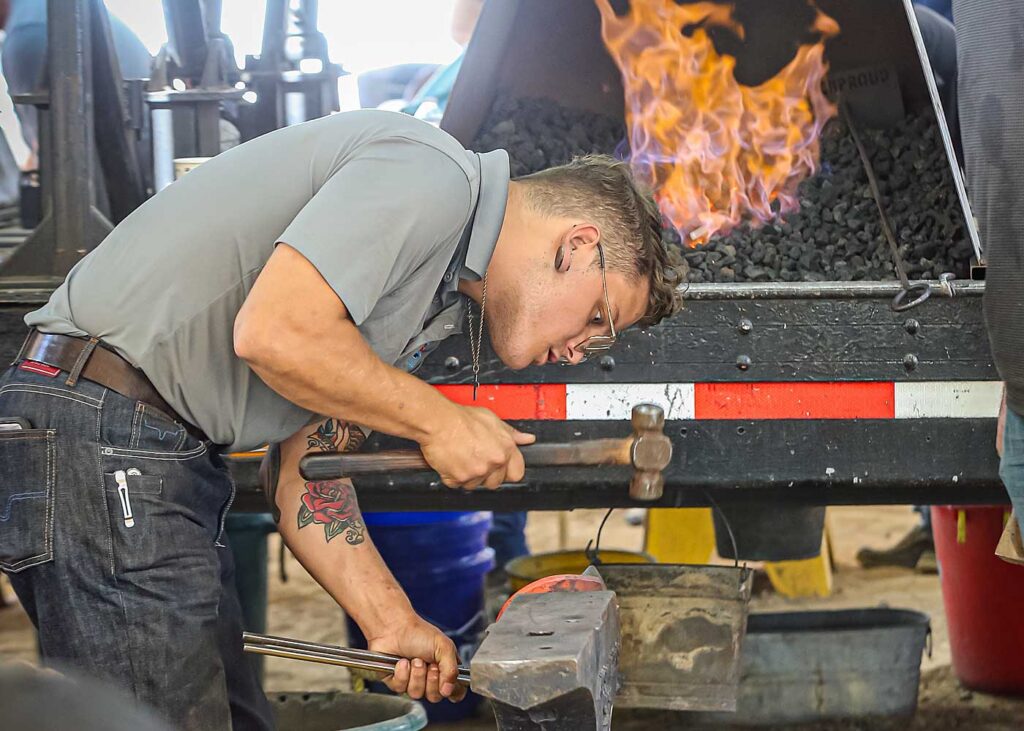
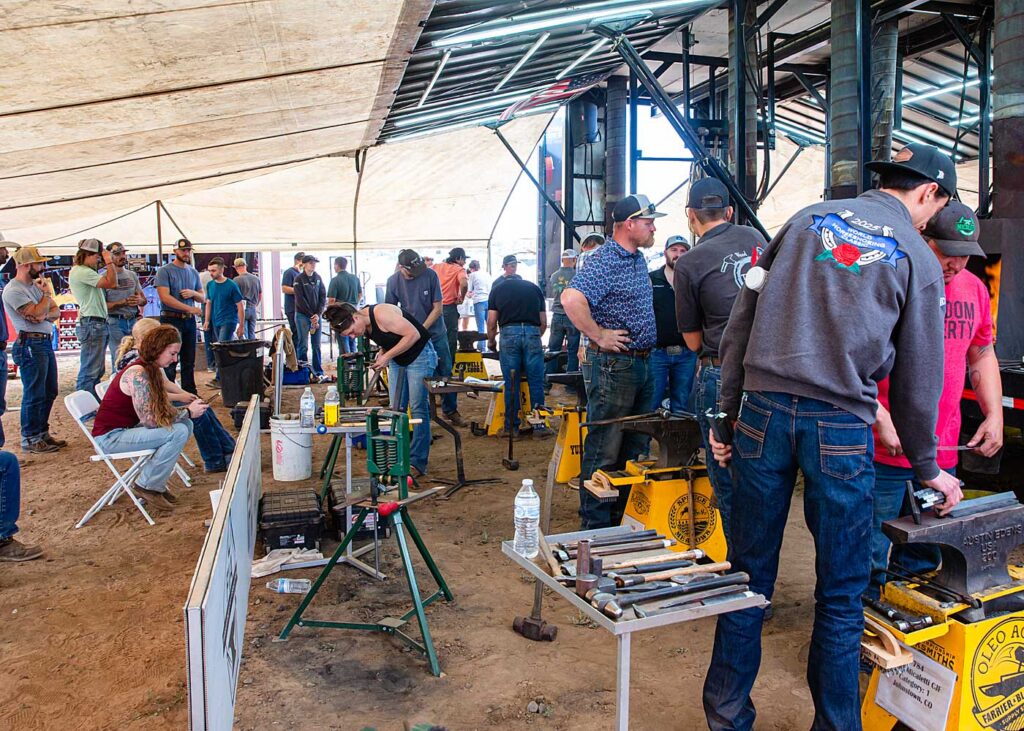
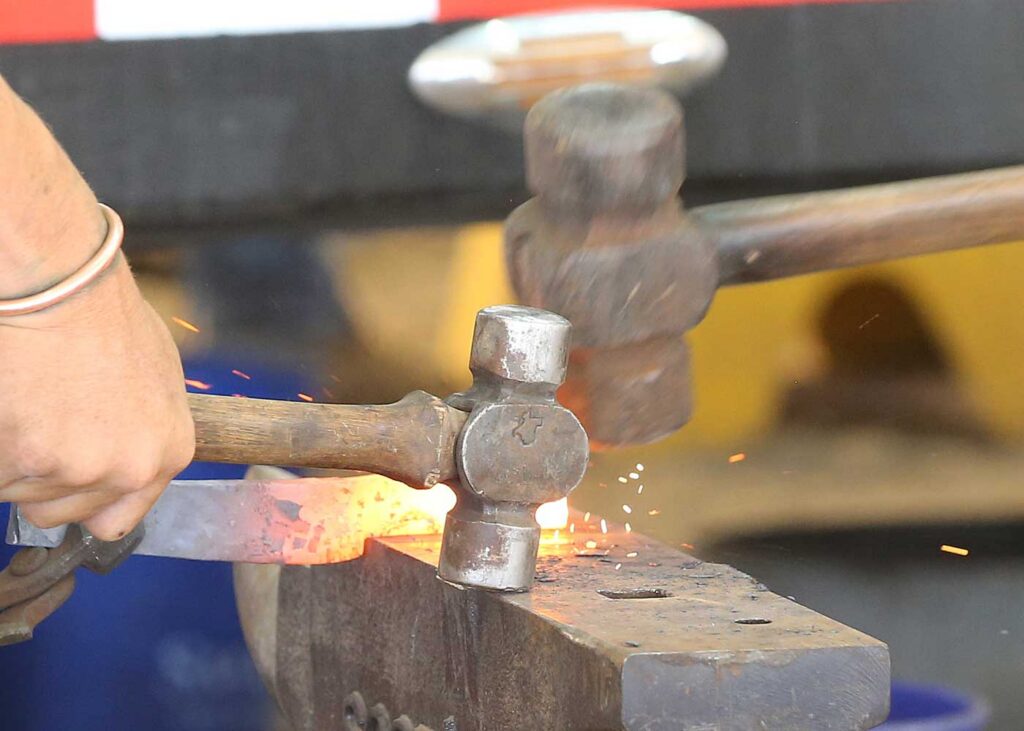
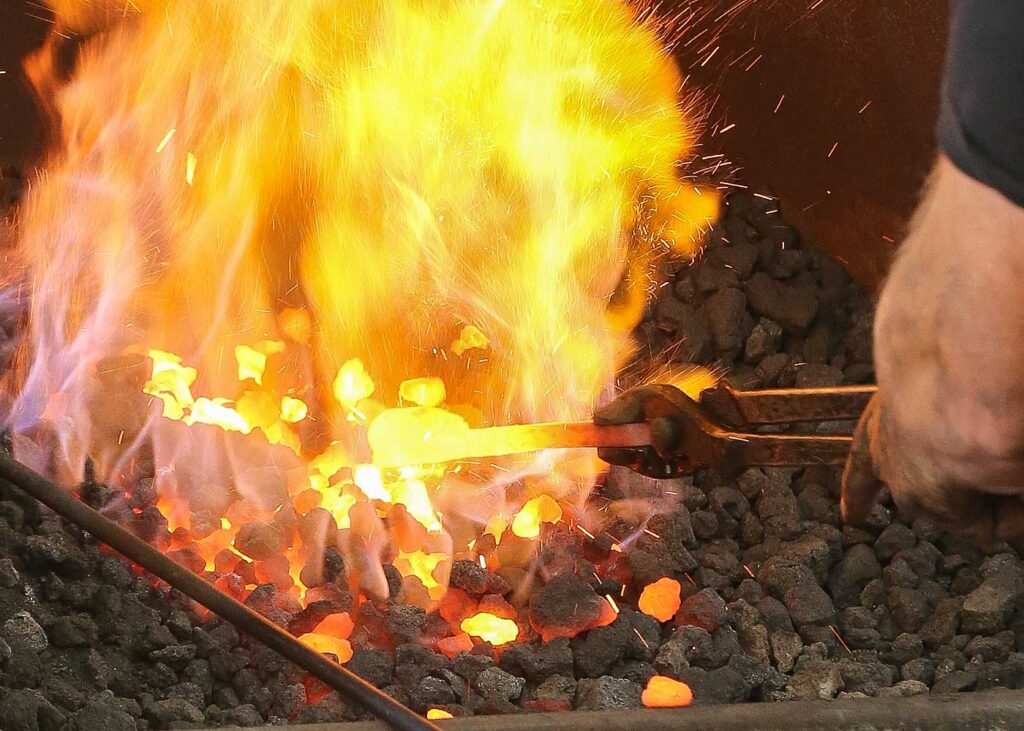
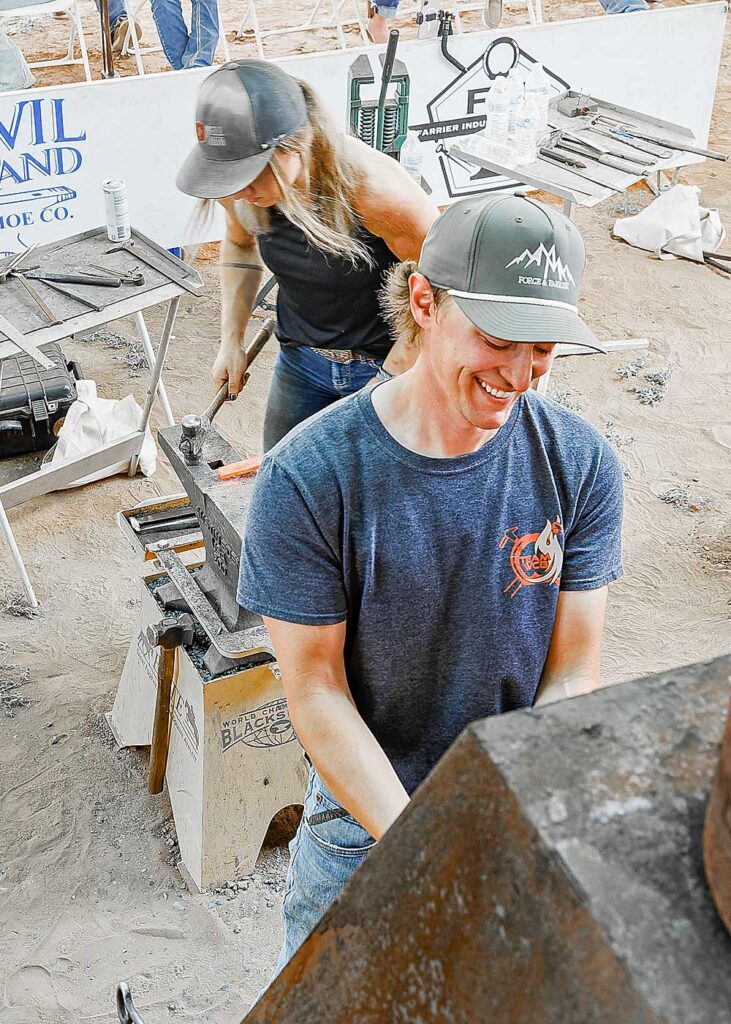
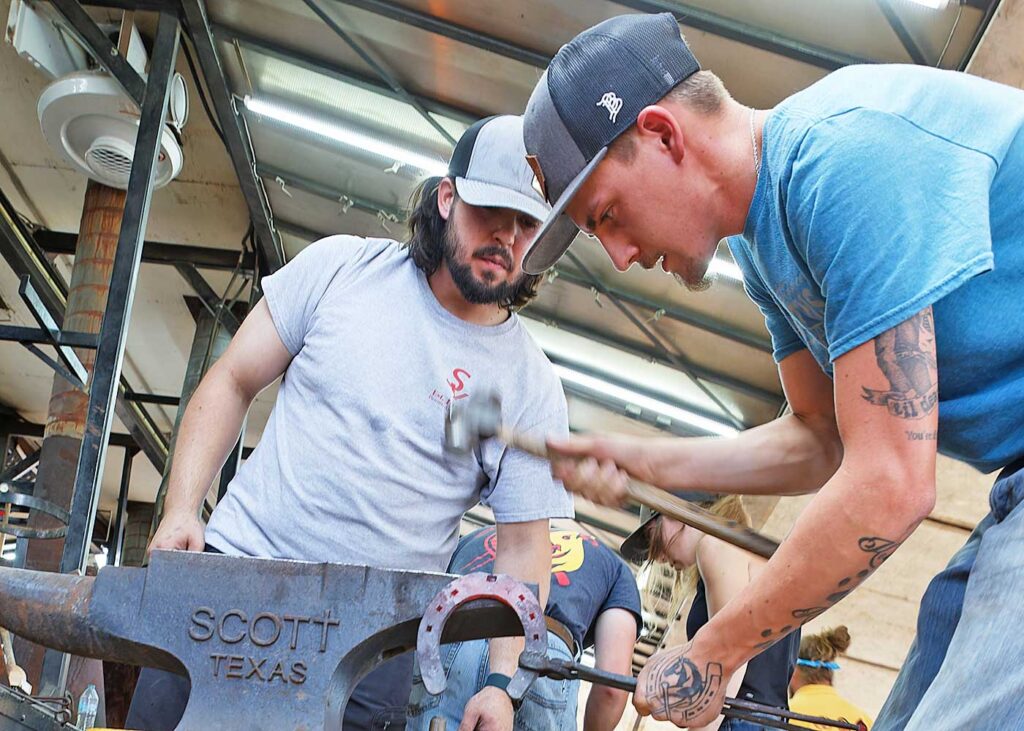
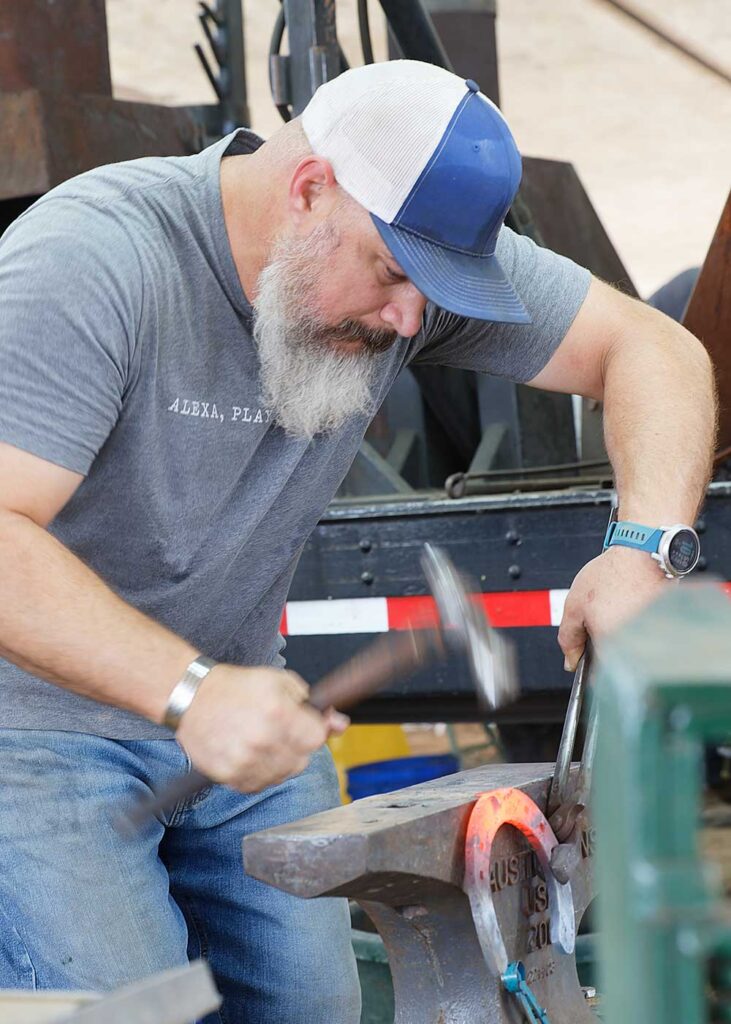
EDGEWOOD — The ring of falling hammers meets a steady roar of 10 forges under an open-sided tent, where a converted semi-truck flatbed serves as what might be the world’s largest mobile, blacksmithing battlefield. By 10 a.m. on Thursday morning, the intensity of the competition is already matching the heat of the flames flickering above competitors’ heads.
For the farriers gathered for the four-day World Championship Blacksmiths (WCB) Roadrunner Classic event, the stakes are as much medical as they are athletic. While the trade might conjure images of old-world agriculture, modern horseshoeing is an elite, high-stakes discipline operating squarely within the sports and entertainment industries.
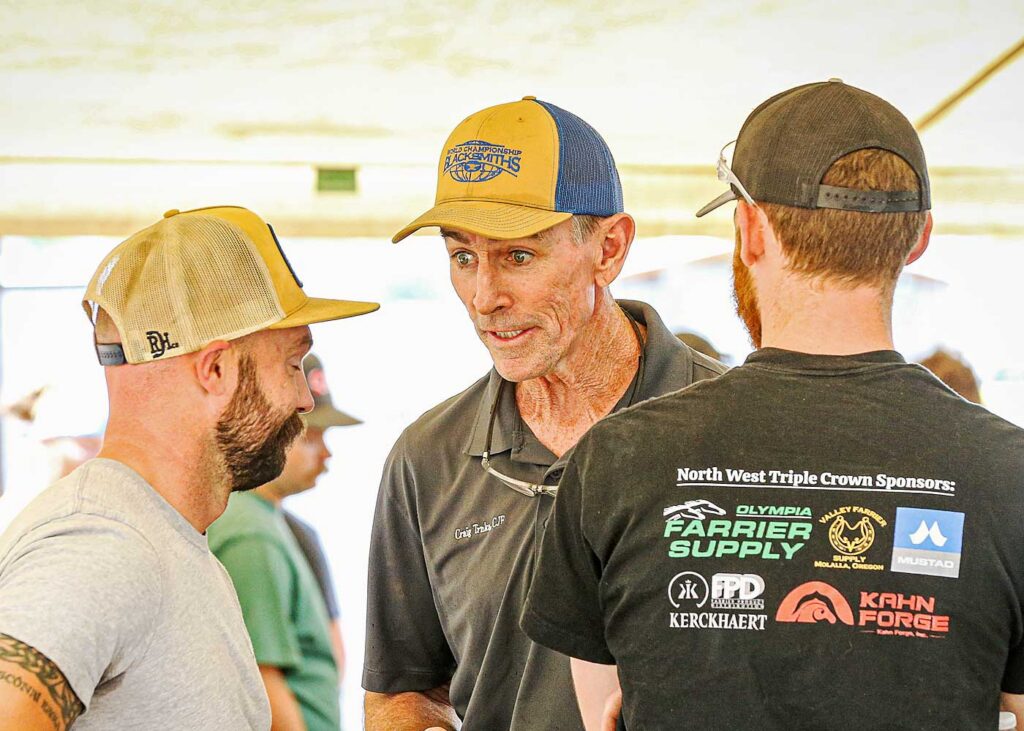
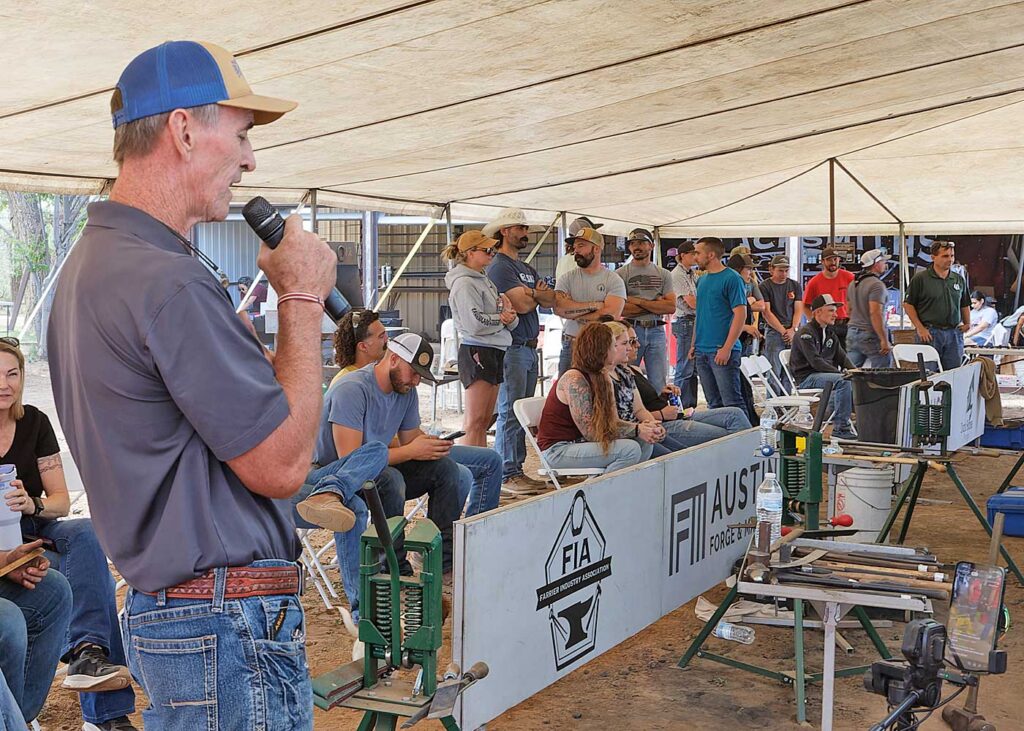
“People usually think of horses as livestock, but horses haven’t been livestock for probably twenty years,” says WCB Chief Executive Officer Craig Trnka. “They are sports and entertainment. A horse is on its feet 24/7, and when those feet fall into neglect, they go lame. What we’re doing here is teaching a new generation how to do things right.”
To the casual observer, horseshoeing might evoke images of an outdated trade, but to Trnka, this isn’t livestock management anymore—it is elite sports and entertainment medicine.
The United States does not require formal accreditation to practice as a farrier, meaning the barrier to entry is wide open, but the learning curve is unforgiving. Trnka notes that many people find the trade later in life—such as veterans transitioning out of the military with VA education benefits—but without a standard vocational pipeline like England’s apprenticeship system, many wander through years of trial-and-error ignorance.
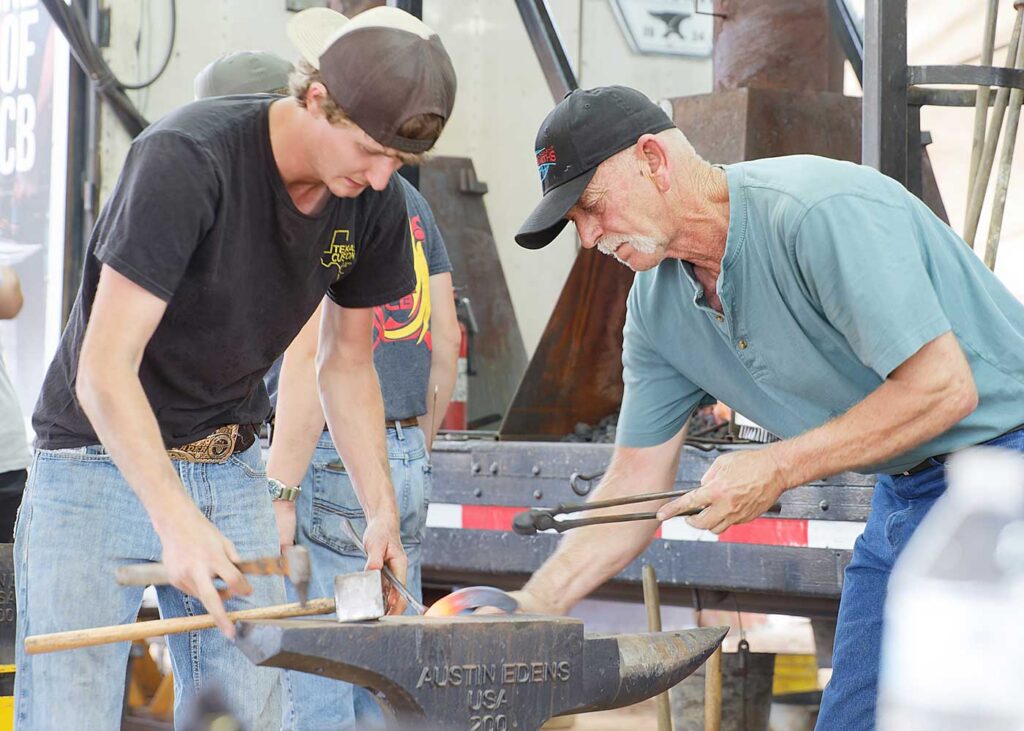
“We want to be about professionalism,” Trnka explains. “We’re trying to teach them that this is an uphill, slow battle. When you make worldly people who travel, navigate new towns, and compete, you make smarter people.”
The Anatomy of a Sixty-Minute ‘Go’
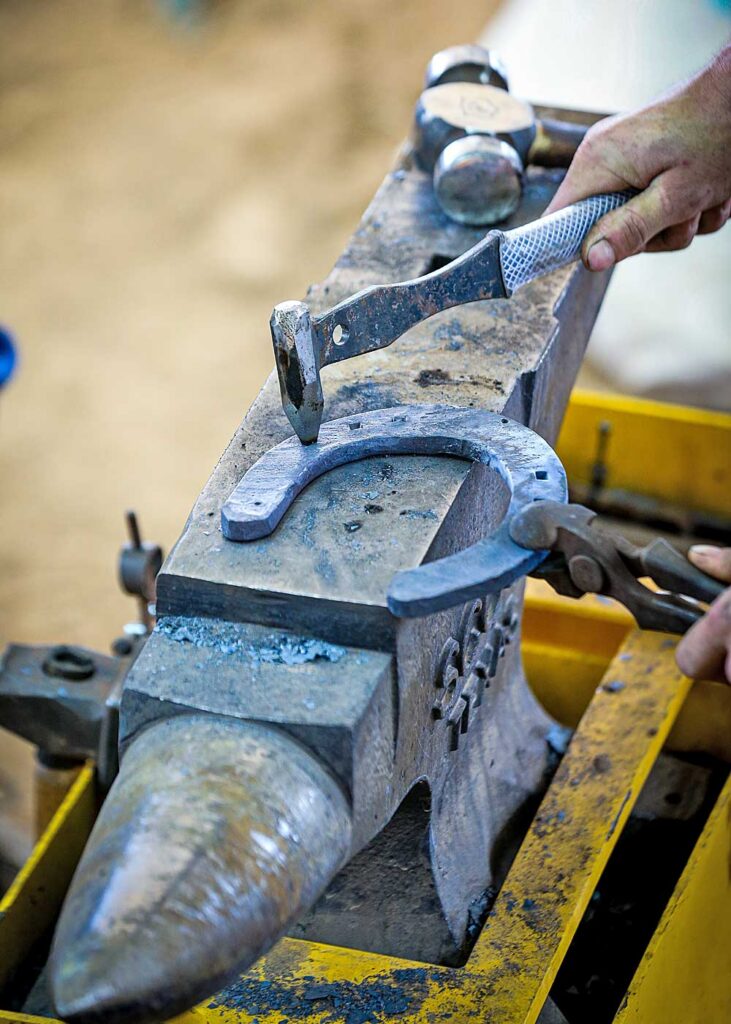
The competition itself forces farriers to think like choreographers. Two months before an event, a judge sends out a strict shoe list detailing the exact dimensions, width, length, and weight of the bar stock allowed.
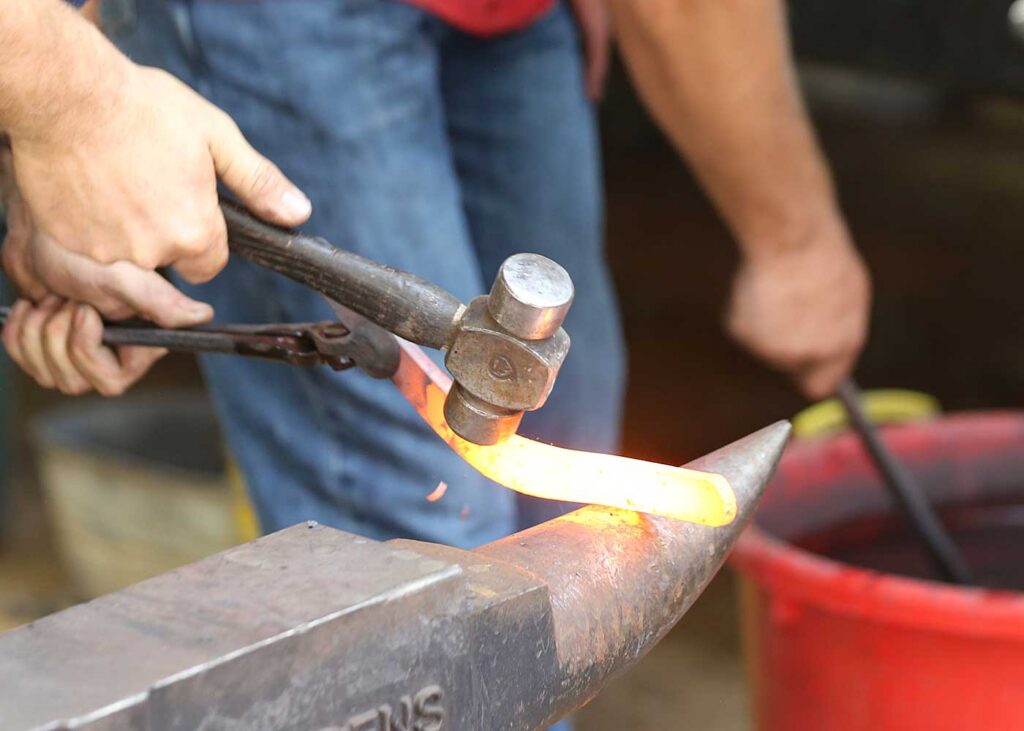
During a standard 60-minute “go,” competitors must forge two complete shoes. With a single “heat”—the window of time the steel remains red-hot and workable—lasting roughly two and a half minutes, a competitor has to mathematically map out their movements across approximately 12 heats.
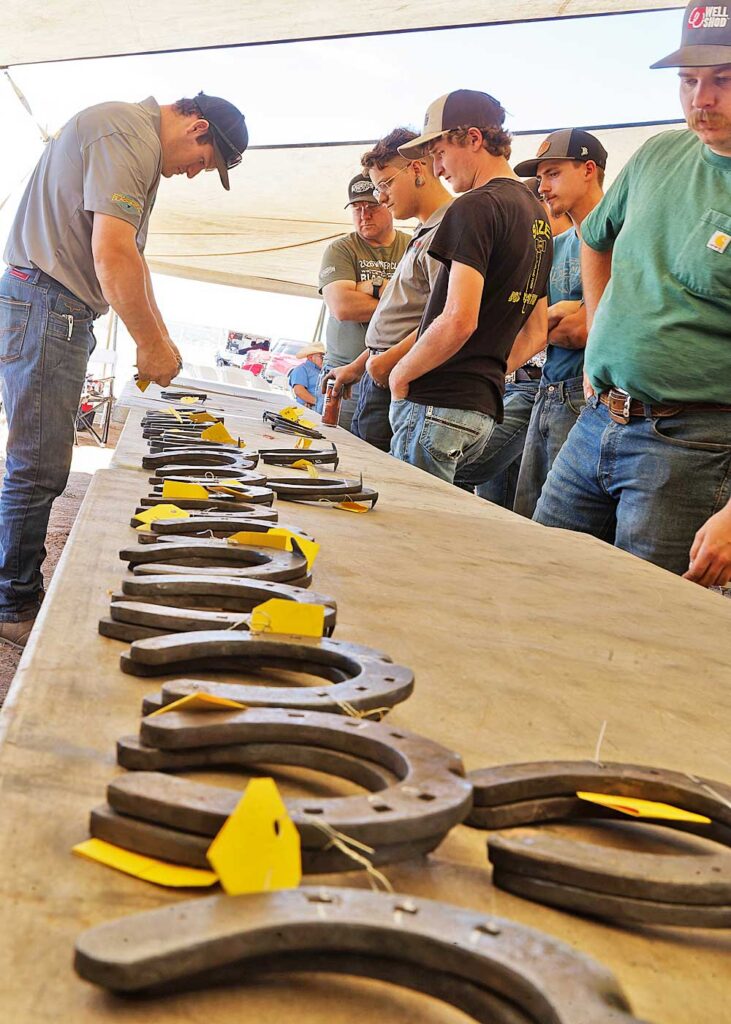
While contemporary horseshoers frequently rely on manufactured “keg shoes,” Trnka emphasizes that handmade proficiency changes how a farrier understands cause and effect.
“Manufacturing is all done vertical and horizontal,” Trnka says. “But a horse has a shape at an angle. Human beings can adjust the nail pitch so it seats perfectly behind the hoof wall without damaging the foot. Horseshoeing is made up of a million little things that make a huge difference.”
The WCB hosts seven events a year across the country, offering roughly $10,000 in cash and prizes at each stop while building an aggregate high-point national standing. The push for early education is paying off; Trnka points out that the national champions are getting younger, with 20- and 22-year-olds taking top honors.
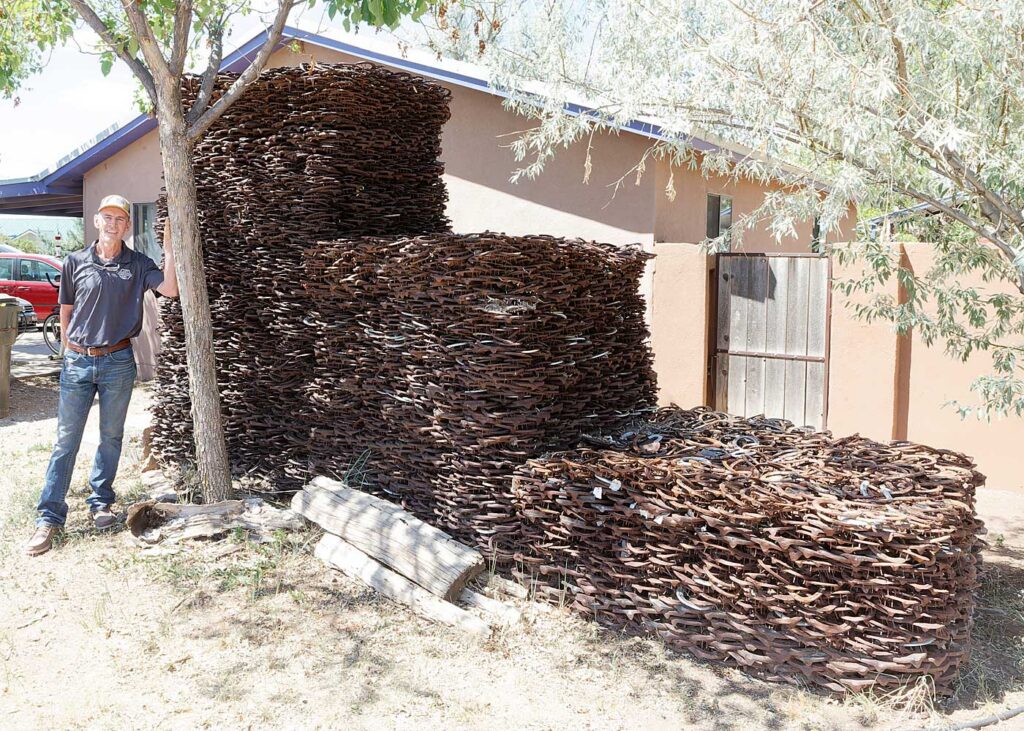
“They aren’t necessarily smarter,” Trnka smiles. “They’ve just eliminated a lot of ignorance by walking right behind the snowplow instead of trying to plow the path themselves.”
Breaking Barriers on the Tool Bench
While the forge line remains heavily male-dominated, the culture under the tent is strictly meritocratic.
“The one thing everybody under here is against is laziness,” Trnka says. “If you work, this group will accept you.”
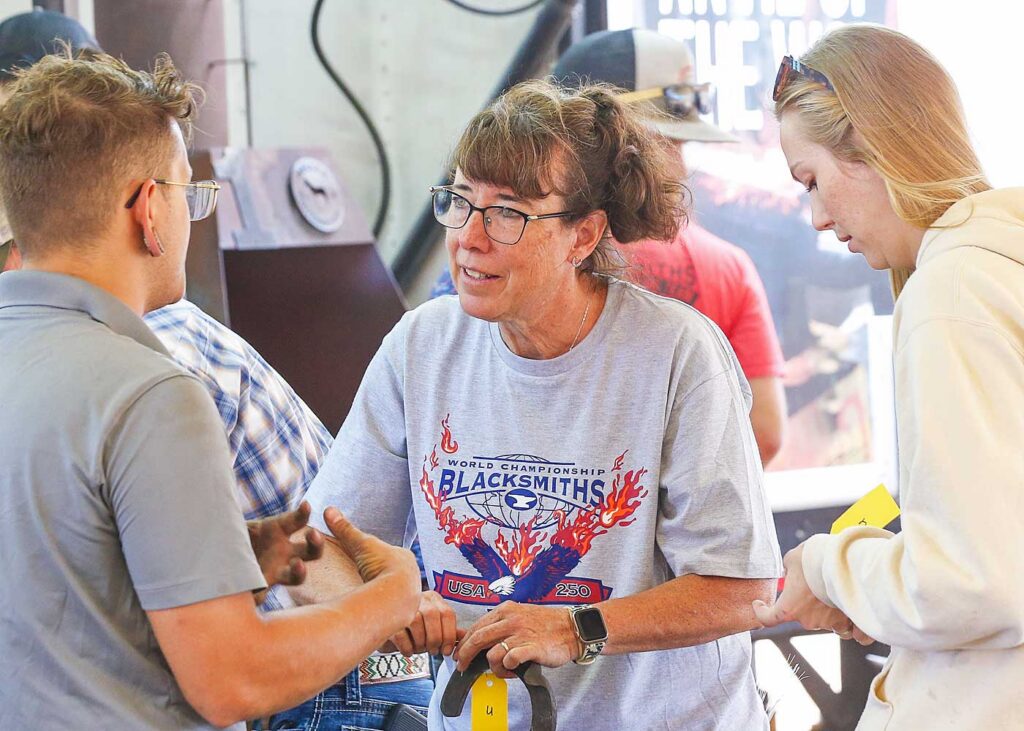
That supportive community is what drew Lydia Gutierrez into her very first WCB competition this week. A resident of Wickenburg, Arizona, Gutierrez graduated from farrier school a decade ago, but got serious about high-level custom shoeing three to four years ago after earning her certifications. She is currently working toward her journeyman credentials.
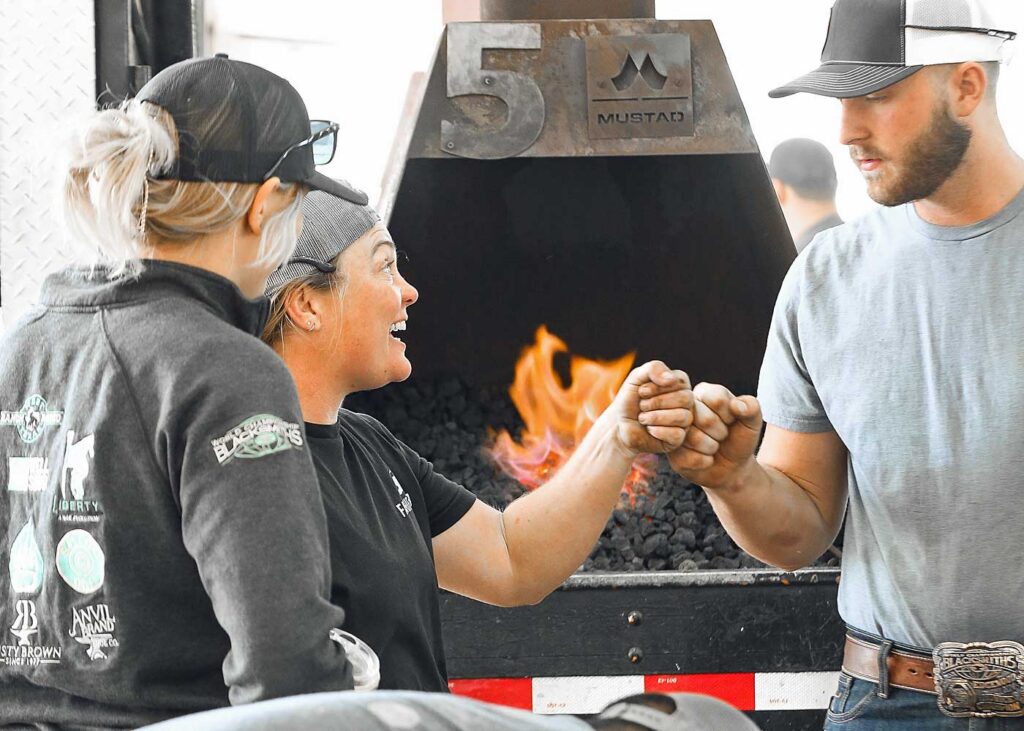
“The guys from the Arizona circuit—Logan Horton, Carly Morris, Logan McMurtry—they are so supportive,” Gutierrez says, wiping away sweat after her novice class run. “They just want to see you win. In this competitive environment, everyone helps each other out.”
For Gutierrez, farriery is a family legacy—her father, grandfather, and sister are all in the trade—though she initially tried to avoid it to focus on training horses and working as a ranch cowboy.
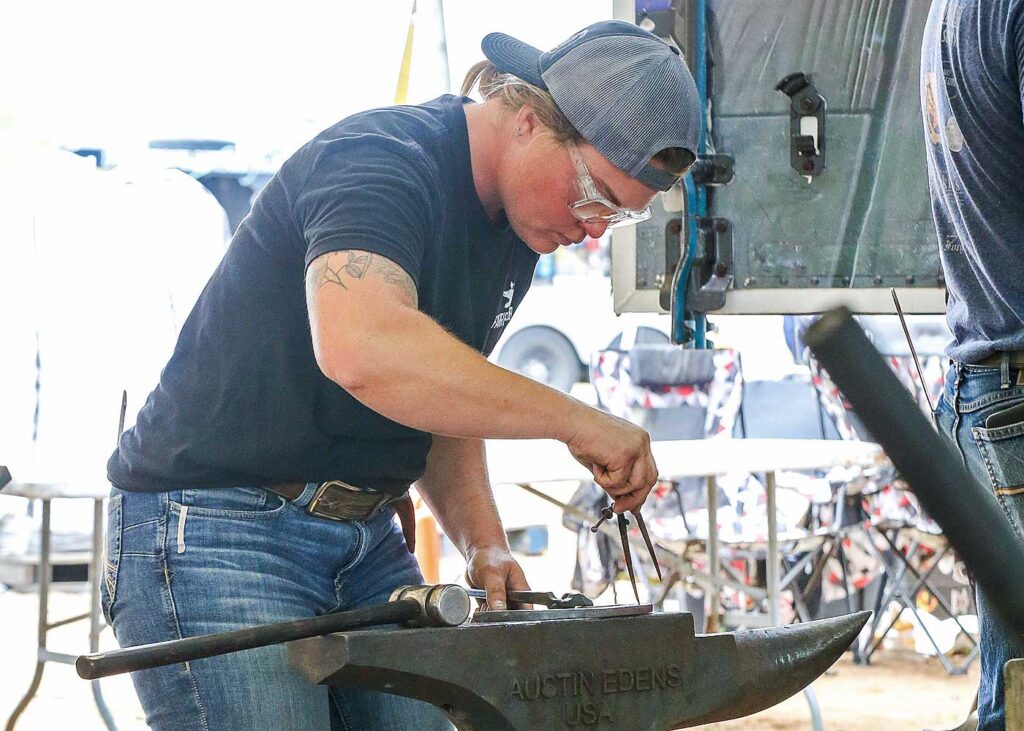
“Over a decade ago, it was harder for a female to get into the ranching world,” Gutierrez recalls. A ranch boss in Nevada named Pepper told her that if she went to shoeing school and learned to maintain her own string of horses, he would hire her. She went to the Midwest Horseshoeing School to secure the ranch job, met her husband—who acted as her “striker” running the forge during Thursday’s competition—and realized the trade offered a viable, dynamic career.
“I tried so hard not to do it, but I love the change every day,” Gutierrez says. “You see the before and after on every single foot. People think you become a farrier so you don’t have to talk to people, but that’s far from the truth. You manage clients constantly. If the horse is doing good, you’re the best thing in the world.”
With 86 competitors coming from 22 states, the World Championship Blacksmith’s Roadrunner event has wide-ranging talent on hand this weekend that will also include live shoeing on Saturday from 9 a.m. until 2:45 p.m. The action on Friday starts at 7 a.m. until around 8:30 p.m.
As the hammers continue to fall into Thursday afternoon, Trnka made it a point to invite the public out to see the action. Trnka and the competitors on the rig, the goal remains unchanged: educating people that there is a deep science, an elite athleticism, and an ancient art hidden behind the smoke.
The World Championship Blacksmiths’ Roadrunner Classic is located at 47 Rainbow Rd. in Edgewood.

East Mountains Rally: Community Steps Up as Food Pantry Faces Record Demand
Watchya Doing? Bull Riding, Moriarty Comic Con, Car Show & Back2School Bash

Man Injured in Cedar Crest Bear Encounter; Officials Urge ‘Bear Aware’ Caution
About The Author
