
Field to Glass: How 19-Year-Old Aiden Schwebach Is Malting New Mexico’s Agricultural Future
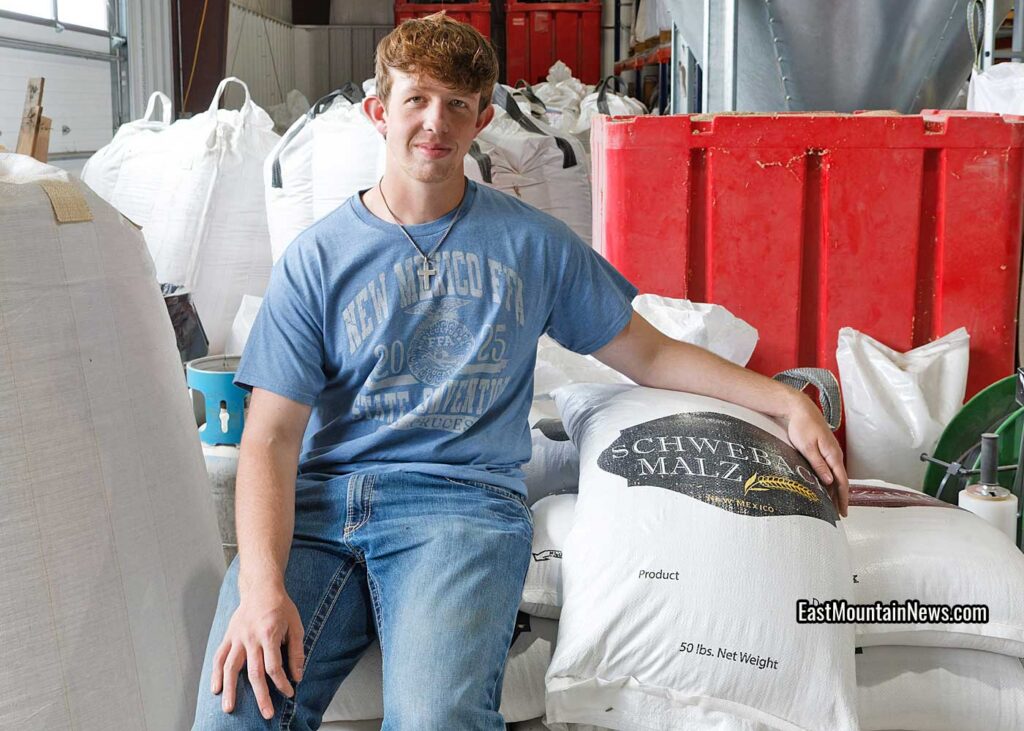
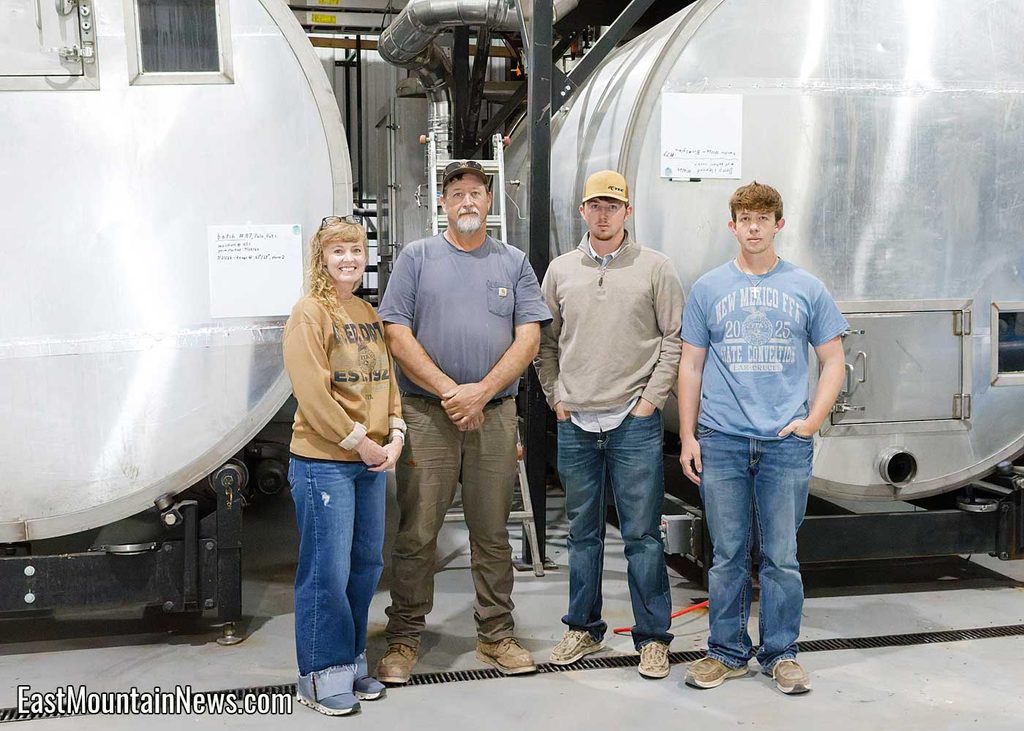
Inside a steel-lined barn in the Estancia Valley, a massive 6,000-pound drum rotates three times every half-hour, whispering with the steady rustle of hydrating barley. At the control screen stands Aiden Schwebach, 19, monitoring temperature profiles, enzymatic degradation, and moisture percentages with the precision of a veteran biochemical engineer.
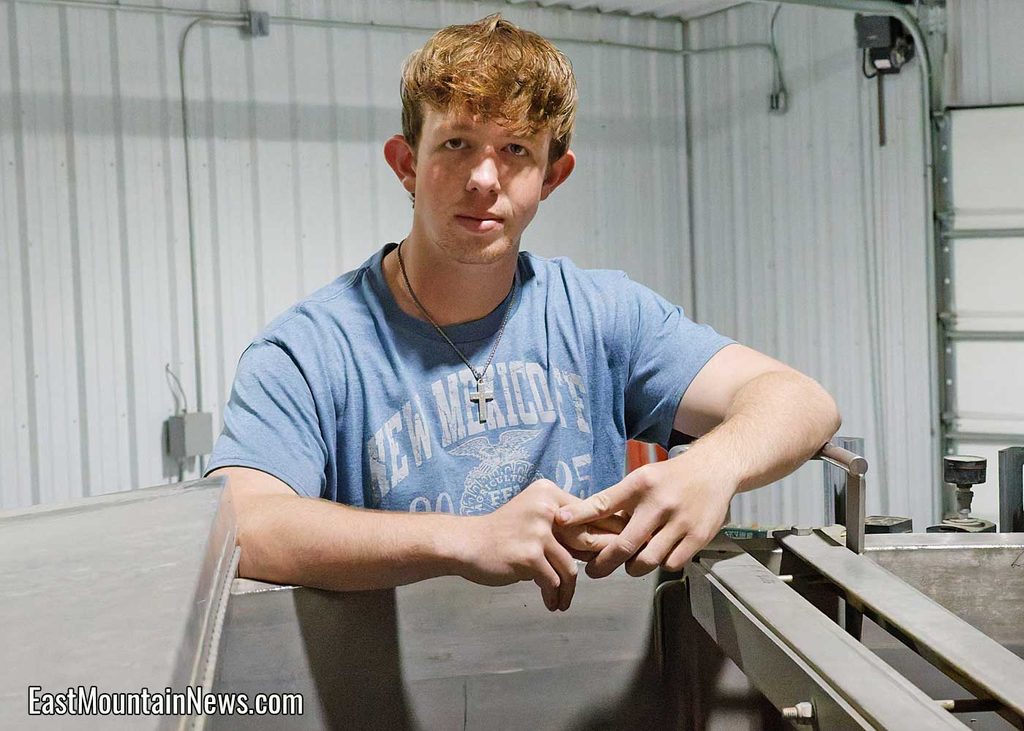
Schwebach is neither a corporate lab technician nor an academic researcher. He is a 2025 graduate of Estancia High School, a dedicated FFA alumnus, and New Mexico’s first-ever craft maltster.
This October, Schwebach heads to the National FFA Convention & Expo as one of only four finalists in the entire country for the Agricultural Processing Proficiency Award—one of the organization’s highest individual honors.
Redefining the High Desert Farm
The journey from traditional farming to craft malting began not with beer, but with economic necessity.
For generations, family farms across central New Mexico built their livelihoods supplying forage crops—primarily alfalfa and corn silage—to regional dairies. When commercial dairies began shuttering around 2019, taking a vast share of dairy cattle with them, the Schwebach family faced declining cash flow and a shifting agricultural landscape. Water scarcity compounded the challenge, prompting them to look at hardier, lower-water crops.

Barley fit the climate perfectly, but raw grain fetched modest returns. The state had approached the farm about growing barley to ship out to Wyoming for malting, only to buy it back as finished malt. When third-party processors struggled to meet quality standards, the family realized that to protect their crop’s value, they had to control its processing.
In 2022, an unexpected opportunity surfaced: a Wyoming malting company offered its complete commercial setup for pennies on the dollar. The family acted fast, investing into equipment and hauling flatbed loads across state lines and assembling a modern processing plant on their own soil.
Aiden, then a high school junior, stepped directly into the driver’s seat.
The Science Behind the Grain
“The dictionary definition of malting is the limited and controlled germination of a cereal grain, followed by drying it via sun or forced airflow,” Schwebach explains. “The purpose is to provide brewers with a fermentable reaction.”
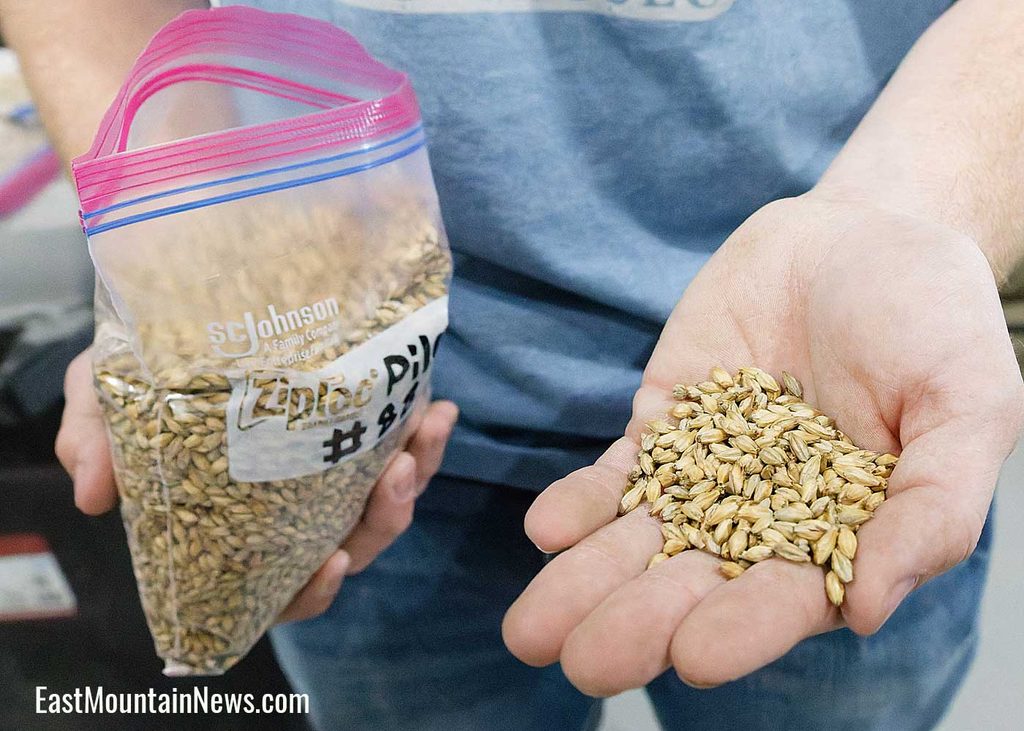
The five- to six-day cycle is an intricate biological dance:
- Steeping: Raw, cleaned barley is submerged in steep tanks until each kernel hits roughly 43% moisture.
- Germination: Moved into the 6,000-pound drum, controlled airflow and rotating cycles break down the kernel’s aleurone layer and cell walls, activating enzymes and amino acids through enzymatic hydrolysis.
- Kilning: Inside the same drum, Schwebach manipulates heat and air recirculation to arrest growth and create flavor. Lower kiln temperatures preserve grassy, honey, and biscuit notes; higher heat yields darker, rich caramel or chocolate crystal malts.
“In order for malt to be usable, it just needs enough enzymes to react with yeast and make alcohol,” Schwebach says. “To make it favorable, you’re balancing beta-glucans, free amino nitrogen, diastatic power, color, haze, and filtration time. I’m a nerd at heart—I love the math and science behind it, and I’ve got folders full of notes on every single batch.”
Earning Respect in the Brewhouse
Mastering the mechanics proved to be only half the battle. When Schwebach graduated high school in 2025, he took charge of day-to-day operations, marketing, and client relations.
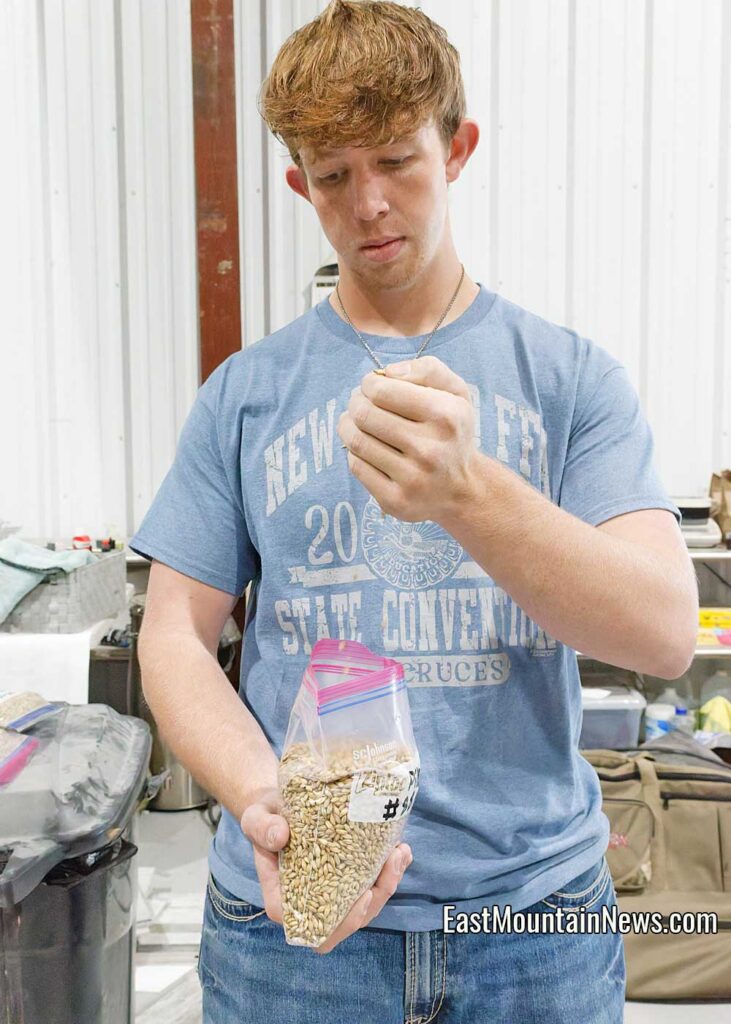
Cold-calling head brewers in their 30s and 40s as an 18-year-old was an uphill climb.
“I’d look up breweries on Google Maps and call asking for the owner, and it rarely worked,” Schwebach recalls. “Selling to dairies is transactional, but selling to brewers requires building deep, technical trust. It took time to prove that I wasn’t just a kid, that I knew the science of my product.”
The breakthrough came in the glass. Second Street Brewery in Santa Fe entered a Kölsch brewed with Schwebach malt into a global beer competition and took second place worldwide. Soon after, Santa Fe Brewing Company—New Mexico’s largest craft brewery—partnered with Schwebach to produce a 2026 summer seasonal using 100% locally malted grain. The beer sold out so fast that emergency orders flooded in to keep taps running.
That local adoption is rippling across central New Mexico brewhouses, where the connection between farmer and brewer has turned deeply personal.
At Rumor Brewing Company, which celebrated its 10th anniversary this August, owner Patrick Johnson made the switch to Schwebach malt about a year ago after meeting Aiden’s father, Ryan Schwebach. Today, Schwebach’s Pilsner malt serves as the exclusive base for every house beer Johnson crafts, layered with specialty crystal and caramel malts to produce an array of American, Belgian, and English styles.
“It’s a little bit more expensive, but it’s local, and we’re local. We love to support that, and it’s a really high quality product,” Johnson said. “It’s just really great for the local economy. I like working with local people. It’s good for the environment, it’s good for relationships, and it’s more convenient. In our case, farm-to-table is about 40 miles, which is hard to beat. It’s neighbor-to-neighbor kind of stuff.”
A Family Tradition of National Excellence
Aiden’s national recognition follows a pattern of high achievement nurtured by FFA’s Supervised Agricultural Experience (SAE) program. Unlike traditional classroom contests, an SAE measures years of hands-on business records, technical duties, financial investment, and operational management.
His older brother, Wylie, earned national acclaim as an SAE winner and made history as New Mexico’s first National American Star in Agricultural Placement award winner. Aiden previously captured a national SAE title in Diversified Crop Production before building his Agricultural Processing portfolio.
“When you sit down and put all of your responsibilities, safety protocols, and data onto paper, you realize you know a heck of a lot more than you thought,” Schwebach says.
Because the SAE program allows members to continue competing through age 21 to foster real career paths, Aiden has the opportunity to pursue the coveted American Star Farmer title next year—a friendly sibling rivalry he laughs about, but takes seriously.
The Road Ahead: Seed, Pint, and Plate
While Schwebach plans to add a specialty roaster soon to double his recipe catalog, his long-term vision looks beyond the malt house walls.
“When I was younger, I thought about opening a restaurant—I even run a food trailer on the side,” Schwebach says. “Once I got into this, I saw the power of vertical integration. The goal isn’t to walk away from the farm; it’s to tie it all together. Farm to table. Field to malt to glass. Expanding into a brewery and restaurant where everything originates right here.”
As the combines roll through the Torrance County fields, Aiden Schwebach isn’t just salvaging a family operation from changing markets—he is proving that New Mexico’s next generation of agriculture can build world-class industries right from the ground up.
The Road to the National Final Four: What the Proficiency Award Means
Administered by the National FFA Organization, the Agricultural Proficiency Awards honor members who, through intensive Supervised Agricultural Experiences (SAEs), develop high-level technical competencies that translate directly into future industry careers.
Rather than judging a single presentation or a standard written test, the proficiency award evaluates years of hands-on business ownership, research, and technical employment. Candidates submit exhaustive, meticulously kept record books that document:
- Hours and Responsibilities: Detailed records of daily labor, equipment maintenance, and operational duties.
- Financial Investment & Growth: Capital expenditures, operational revenue, cash flow management, and business asset growth.
- Skill Competencies: Specialized proficiencies acquired in science, agricultural mechanics, and processing chemistry.
- Management Knowledge: Mastery of workplace safety protocols, environmental stewardship, marketing strategy, and quality-control systems.
Within FFA’s broad competitive spectrum, the Agricultural Processing category specifically benchmarks members who turn raw agricultural commodities into market-ready consumer goods—spanning everything from custom meat processing and commercial dairy production to grain milling and food canning.
In Schwebach’s case, the project centers on an unprecedented venture: operating as a first-generation craft maltster, processing raw, estate-grown barley into brewing- and distilling-grade malt. The feat makes him the first commercial maltster of his kind in the state of New Mexico, and among the youngest in the United States.
Earning a national finalist jacket represents the pinnacle of individual achievement within the FFA. Contenders must win at the local chapter, district, and state levels before their portfolios are advanced to national judging panels. Out of dozens of state champions evaluated nationwide, judges select only four finalists per category. In October, those four sit before an intensive panel of industry executives for a technical interview, followed by national recognition on stage during the arena sessions at the National FFA Convention, where the overall winner is revealed.
Schwebach is the son of Shannon and Ryan Schwebach.

Stewart Signs with Minnesota North College Following Breakout Senior Season

Smoke, Iron, and Resilience: Keeping the Fire Alive at Ribs BBQ

Carrying the Ball Home: How a Team of New Mexico Artists Brought a 900-Pound Bronze Warrior to Life
About The Author
