

BEATING THE HEAT: WHY THAT EXTRA 10 DEGREES CRIPPLES SWAMP COOLERS

EAST MOUNTAINS — When summer temperatures cross the line from warm to scorching, millions of homeowners relying on evaporative coolers — better known as swamp coolers — suddenly feel the heat inside their own living rooms.
The difference between a 90-degree afternoon and a 100-degree blast isn’t just 10 degrees on a thermometer. For a swamp cooler, it is the difference between crisp, chilly relief and a house that feels like a humid gym locker.
Understanding why requires only basic grade-school subtraction.
Swamp coolers do not use refrigeration chemical compressors like standard air conditioners. Instead, they pull hot, dry outdoor air through water-soaked pads. As the water evaporates into the air, it absorbs heat, chilling the air before blowing it through the house.
Under ideal dry conditions, a typical swamp cooler can lower the incoming air temperature by about 20 degrees.
Here is where simple math explains the comfort gap:
- On a 90-degree day: Take 90 and subtract 20. The air blowing out of the vents enters the house at 70 degrees. That is cool enough to keep a home comfortable all afternoon.
- On a 100-degree day: Take 100 and subtract 20. The air coming out of the vents enters the house at 80 degrees.
While 80 degrees might sound tolerable on paper, humidity changes the equation.
Every time a swamp cooler runs, it pumps water vapor into the air. On a 90-degree day, blowing 70-degree air into a room keeps the relative humidity manageable. But on a 100-degree day, blowing 80-degree air adds heavy moisture to a room that is already warm.
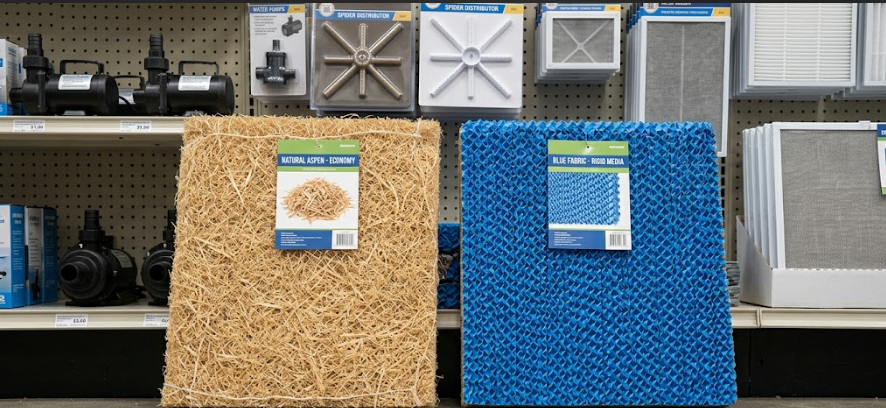
Because humid air makes it harder for human skin to sweat and cool off naturally, 80 degrees with high indoor humidity feels closer to 85 degrees.
Additionally, as outdoor air reaches 100 degrees, monsoon moisture often creeps into the region. Swamp coolers rely entirely on dry air to evaporate water. When outdoor humidity rises, evaporation slows down, cutting the cooler’s efficiency from a 20-degree drop to as little as 10 or 12 degrees.
On a muggy 100-degree afternoon, subtracting just 10 degrees leaves home interiors hovering at a sticky 90 degrees.

HVAC technicians recommend opening windows a few inches on the lee side of the house to keep air moving, servicing water pads before peak summer heat hits, and using ceiling fans to assist air circulation when temperatures push into triple digits.
BEATING THE HEAT: WINDOW AC UNITS AID SWAMP COOLERS, BUT DEHUMIDIFIERS FALL SHORT
When triple-digit heat pushes evaporative coolers past their limit, homeowners often scramble for household workarounds to squeeze extra comfort out of their systems.
While some supplemental tactics offer immediate relief, others sound logical on paper but backfire in practice.
The Window AC Advantage: A High-Value Hybrid Solution
Installing a window air conditioning unit in a primary living area—such as a bedroom or main office space—is one of the most effective ways to complement a central swamp cooler on 100-degree days.
Standard window AC units do not rely on evaporation. Instead, they use chemical refrigerants to extract heat and squeeze moisture directly out of the indoor air.
During extreme afternoon heat, homeowners can shut the door to a specific room, turn off the swamp cooler vent in that space, and run a window unit to create a cold, low-humidity oasis. Because the window unit only needs to cool a single room rather than the entire house, electrical consumption remains significantly lower than running a whole-house refrigerated central air system.
The Dehumidifier Myth: Why Fighting the Cooler Backfires
A common theory among struggling homeowners is that running a portable dehumidifier alongside a swamp cooler will pull out the excess dampness and make the home feel cooler.
Thermodynamic physics shows why this creates a losing battle:
- Conflicting Mechanics: Swamp coolers work by intentionally pumping gallons of water vapor into the house to drop the air temperature. A dehumidifier works by pulling that exact water vapor back out of the air. Pitting the two appliances against each other forces both motors to run constantly without achieving relief.
- The Heat Output Factor: Dehumidifiers do not exhaust hot air outside unless custom-vented through a window. The compressor and fan inside a portable dehumidifier give off noticeable exhaust heat into the room as they extract water, effectively acting as a small space heater.
- Airflow Cancellation: Swamp coolers require open windows or exterior vents to exhaust displaced air out of the house. Dehumidifiers require closed doors and windows to pull moisture from a fixed volume of air efficiently. Operating both simultaneously violates the basic airflow needs of both systems.
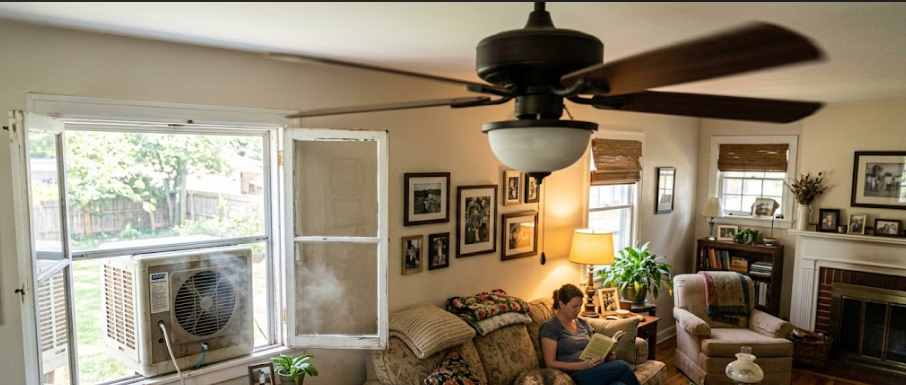
Simple Steps to Boost Cooling Efficiency
Rather than adding moisture-canceling appliances, HVAC professionals suggest using tactical habits to maintain lower indoor temperatures when outdoor conditions hit triple digits:
- Pre-Cool the Structure: Turn the swamp cooler on early in the morning while outdoor temperatures are still in the 60s or low 70s. Cooling down the home’s walls, floors, and furniture early prevents heat from building up inside the materials before the afternoon peak.
- Manage Exhaust Vents: Adjust window openings based on where people gather. Opening a window 1 to 2 inches in an occupied bedroom draws cool air across the home toward that specific exit point.
- Combine with Ceiling Fans: While swamp coolers lower the air temperature, ceiling fans increase the “wind chill” effect on human skin, making 80-degree air feel closer to 75 degrees without adding moisture.

DEFCON ARRRGH: The Great New Mexico Pirate-Viking Invasion is Upon Us!

East Mountain High School Innovators Secure Top Honors at Governor’s STEM Challenge with Autonomous Wildfire-Fighting Robot
Edgewood to Host 23rd Annual Father’s Day Car Show, Marking Route 66 Centennial
About The Author
