

The Song is Ending: New Mexico’s Iconic Musical Highway Falling into Harsh Disrepair
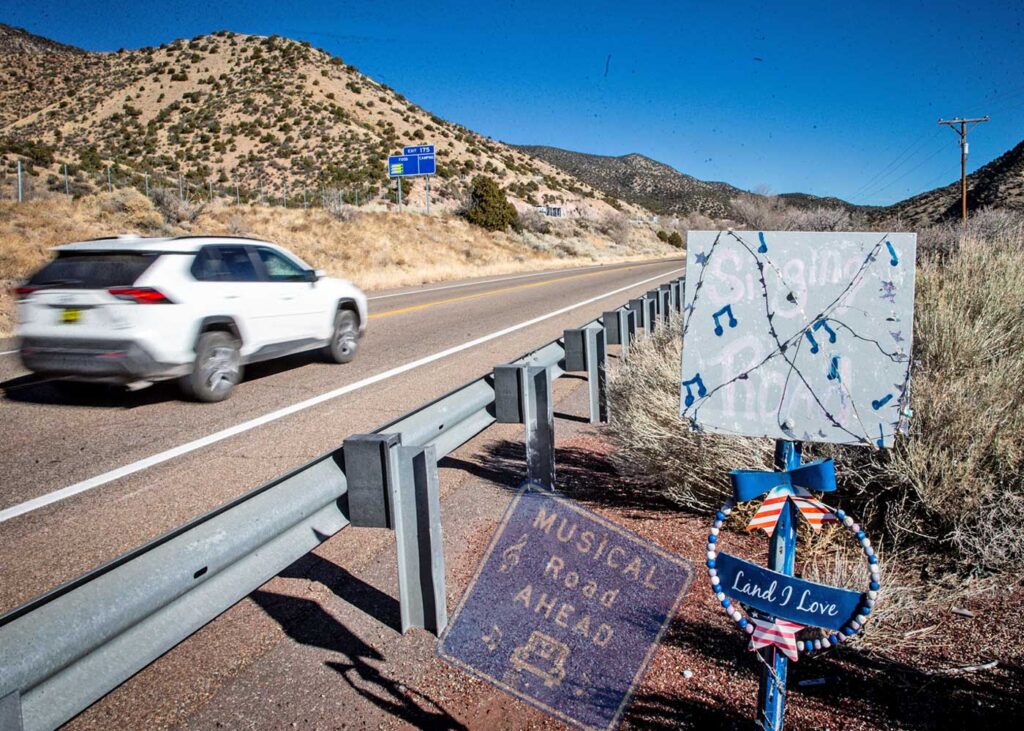
TIJERAS, NM — It was once hailed as a triumph of “fun engineering” a stretch of the Mother Road that didn’t just carry travelers but serenaded them with the notes of “America the Beautiful.” But today, the Route 66 Musical Highway, located on NM 333 just west of Tijeras, is sounding more like a broken record than a patriotic anthem.
Thirteen years after its high-profile installation by the New Mexico Department of Transportation (NMDOT) and National Geographic, the “singing road” is rapidly fading into a cautionary tale of roadside neglect. The decline has become so pronounced that it has reached the floor of the State Capitol, sparking a legislative push to save the attraction before it is silenced forever.
A Global Rarity
New Mexico’s musical highway is part of an elite and eccentric global club, being one of only a handful of such installations in existence worldwide. The concept originated in 1995 with the “Asfaltofon” in Denmark, created by two artists who used raised pavement markers to play a four-note fanfare. While the Danish prototype proved the concept, it was Japan that truly embraced the “Melody Road.” Following an accidental discovery by an engineer who scraped a road surface with a bulldozer, Japan now hosts over 30 musical stretches across the country, playing everything from traditional folk songs to pop hits, often using the left and right wheels to create a polyphonic effect.
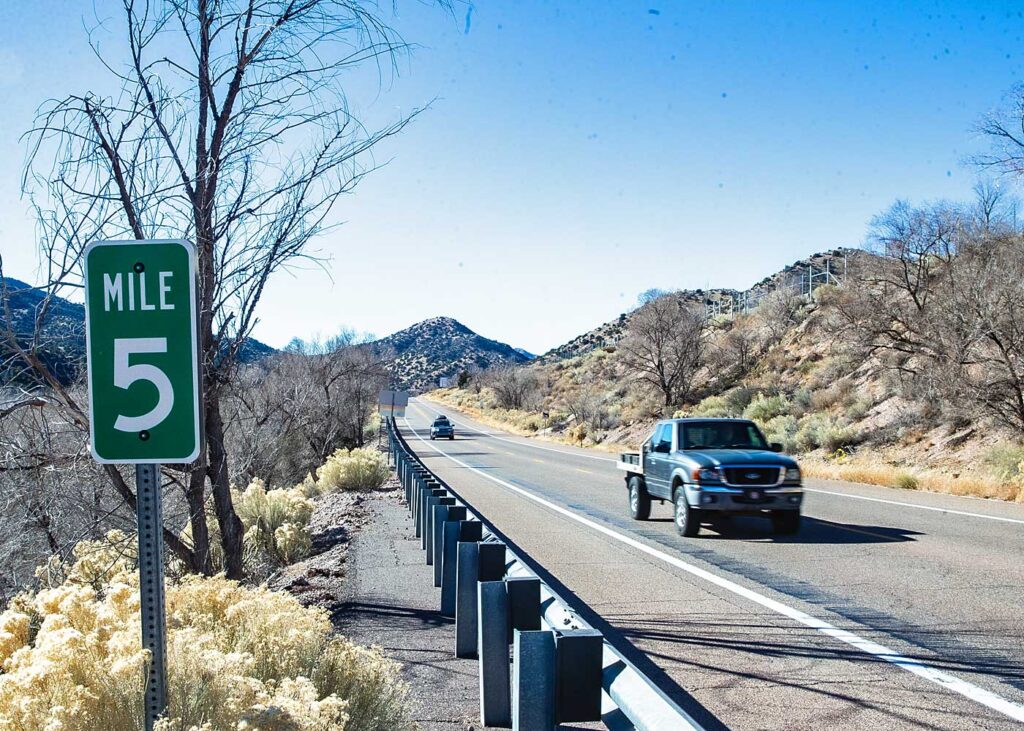
Outside of Japan, these “asphaltophones” serve diverse purposes, ranging from tourism to life-saving safety measures. In South Korea, a “Singing Road” near Anyang plays “Mary Had a Little Lamb” to keep drivers alert on a treacherous, accident-prone stretch of highway. Other notable examples can be found in Hungary, where a road plays a local rock anthem, and in Lancaster, California, which famously features a musical road playing the “William Tell Overture”—though an engineering miscalculation during its relocation left it permanently out of tune. In this global landscape, New Mexico’s Route 66 installation remains one of the few dedicated to a national anthem, making its current state of decay particularly poignant for travelers.
A Fading Welcome
For travelers heading eastbound into Tijeras Canyon, the first sign of trouble—or lack thereof—is the signage. The original bright blue markers that once instructed drivers to maintain exactly 45 mph to trigger the melody became casualties of the high-altitude sun and were removed.
The lack of clear signage has led to many tourists missing the “sweet spot” entirely, often swerving dangerously near the shoulder as they hunt for the specific set of rumble strips required to trigger the melody.
A Muted Melody
The physical state of the road is even more concerning. Engineering experts note that the musical effect relies on the precise depth and spacing of the grooves in the asphalt. However, over a decade of New Mexico winters and heavy traffic has smoothed the edges of the “notes,” leaving the song muffled and out of tune.
Worse still, recent “repairs” have effectively silenced the finale of the song. A patch of the eastbound lane near the end of the musical stretch was filled with road tar. It is unclear what was being repaired but the work muted the final bars (100-feet estimated) of the anthem. Drivers who manage to drive through the song are now met with a sudden, jarring silence or a generic road drone just as the melody should reach its crescendo.
Legislative Action: House Memorial 38
Recognizing the rapid deterioration of this unique landmark, Representatives Stefani Lord and Anthony L. Thornton introduced House Memorial 38 (HM 38) during the 2025 Regular Session of the New Mexico Legislature.

The memorial, which passed the House in March 2025, is a formal request to the NMDOT to prioritize the restoration of the highway. The text of the memorial highlights several key grievances, noting that:
- Specialized signage has been removed or allowed to fall into disrepair.
- Standard asphalt patches have physically deleted portions of the song.
- Only a “small section” of the original 1,300-foot installation remains functional.

Because HM 38 is a memorial and not a bill, it does not mandate funding or carry the force of law. Instead, it serves as an official “expression of sentiment,” urging the NMDOT to recognize the highway as a major asset for New Mexico tourism.
The Race to 2026
The push for restoration comes at a critical time. The 2026 Route 66 Centennial is expected to bring a massive surge of international and domestic tourism to the state. Sponsors of the memorial argue that leaving the highway—one of only six in the world—in its current “shoddy” state would be a missed opportunity and an embarrassment during the centennial celebrations.
Without a dedicated budget for the specialized milling required to recut the grooves, the musical highway remains a “ghost attraction.” For now, the road continues to play its tune, but for those who remember the crisp melody of 2014, the music is clearly dying.

From the Florida Flats to the High Desert: The Paintings & Assemblages of William Bock

A Safe Place in Tijeras: Giving Abandoned Pigs and Shelter Puppies a New Lease on Life

The Great New Mexico Shortcut: A Tale of Spite, Snow, and the Mother Road’s 100th Birthday
About The Author
