

High Desert Resilience: How Summit Leon is Redefining Farming in the East Mountains
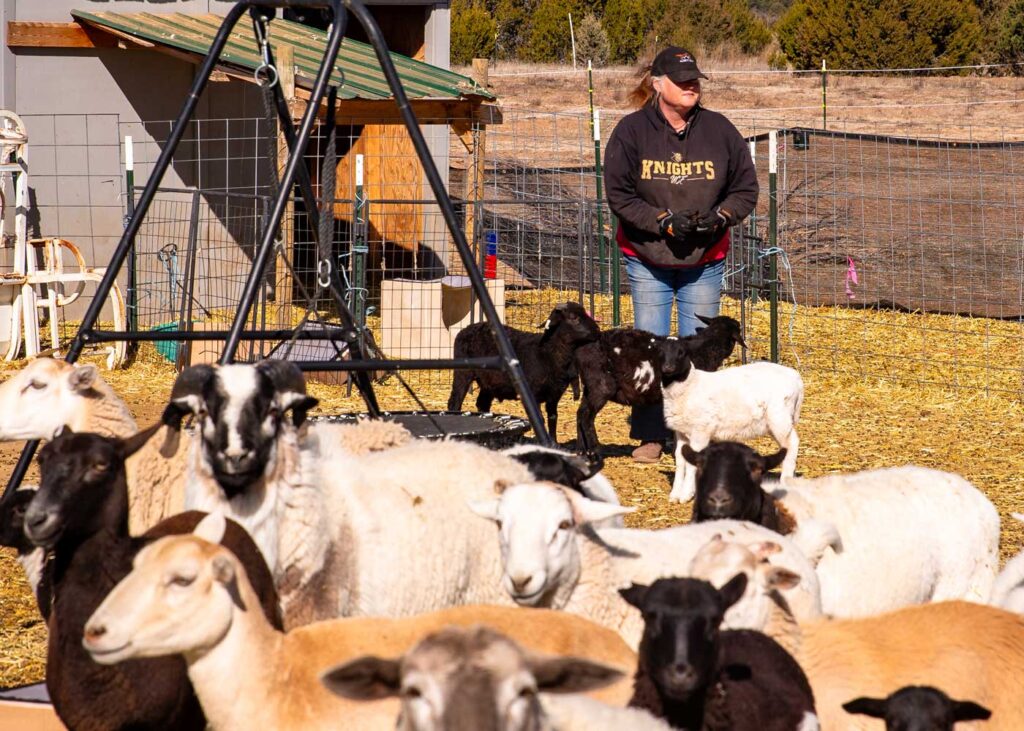
TIJERAS — On a 16-acre acre plot of soft dirt, high-desert grass and brush, Kerri Barber is building something more than a ranch. She is building a sanctuary. Her business, Summit Leon, is a testament to the idea that a “food desert” can be bloomed with enough research, determination, and a 10,000-step-a-day routine.
Under the tagline “Resiliently Raised. Sustainably Sourced. Locally Loved,” Summit Leon has become a beacon for regenerative agriculture in the high desert, proving that even the harshest environments can sustain life when managed with intention.
The Birth of Summit Leon: Necessity Meets Heritage
While many agricultural ventures are born of legacy, Summit Leon was born of necessity—specifically, the necessity of health and community. For Barber, the catalyst was twofold: a need to manage a physical disability and a desire to address local food insecurity.
Living with osteoarthritis and a visual impairment that limits her to “tunnel vision,” Barber discovered that traditional fitness was nearly impossible. “I get about 15 minutes on concrete like at the grocery store or in Albuquerque. That’s it. I’m done,” Barber explains. “But here on the dirt… I can get my 10,000 steps.”
What started as a personal health journey has evolved into a sophisticated operation centered on rare heritage breeds. Barber specializes in Navajo-Churro sheep, North America’s first domestic sheep breed, known for their extreme hardiness and cultural significance. Alongside these are Nigerian Dwarf goats, chosen for their rich milk and adaptability.
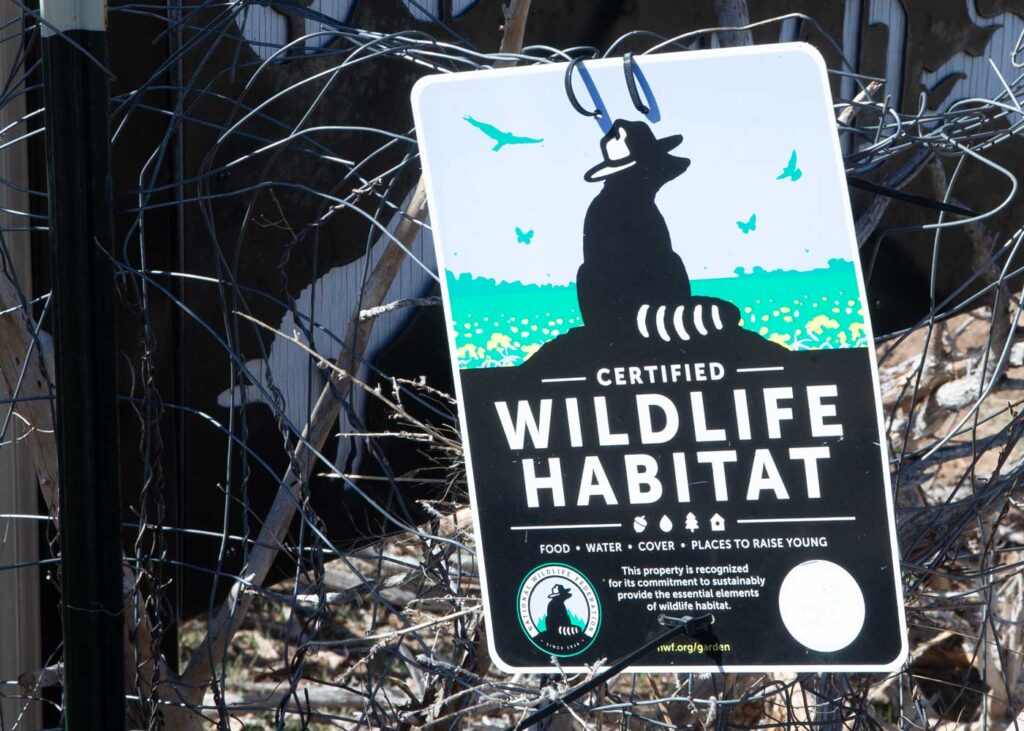
The farm is a “Certified Wildlife Habitat” and operates under a “Predator Friendly” certification, meaning Barber coexists with the local ecosystem rather than fighting it. Using “parasite confusion” techniques and strictly chemical-free practices, she produces everything from artisanal wool and pelts to raw honey and farm-fresh eggs.
Her business model frequently puts her at odds with standard USDA price lists because she refuses to pass on the high costs of sustainable farming to her neighbors. “I have advisors who I’m pretty sure have lost patience with me,” she says. “But I cannot say I love somebody and not want to literally help them feed their kids. This is love.”
The “Freight Train” Security Team
Life on a “predator encroached” ranch requires a unique brand of security. While Barber has four dogs inside the house, the perimeter is guarded by Paco, a rescue donkey with a “foghorn” bray and the momentum of a freight train.
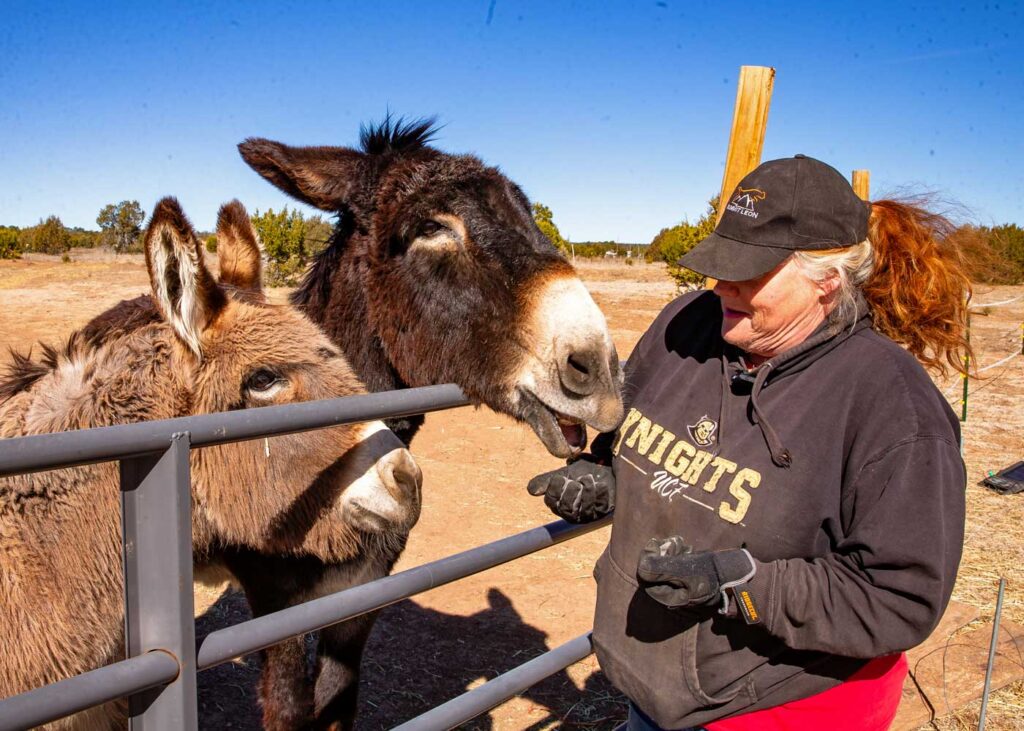
Paco was a “problem child” at a local donkey rescue, known for biting and being generally unmanageable. Under Barber’s care, he found his purpose as a guardian. Shortly after arriving, he successfully fended off a pack of four coyotes. Today, he stands as the primary deterrent, ensuring the safety of the Navajo-Churros without the need for lethal force.
A Past Forged in Fire
The tenacity Barber brings to farming was forged in the high-stakes world of Chicago politics. Before the East Mountains, Barber’s life was defined by the clatter of keyboards and the shadow of death threats.
As an investigative journalist, she uncovered one of the largest corruption schemes in Illinois history. It was a career that earned her accolades, but also six death threats. Eventually, the risk became too high.
“My husband said it was time to leave,” Barber recalls. “The choices were somewhere in California, Baltimore, or Albuquerque. I picked here because Bugs Bunny made it sound so great.”
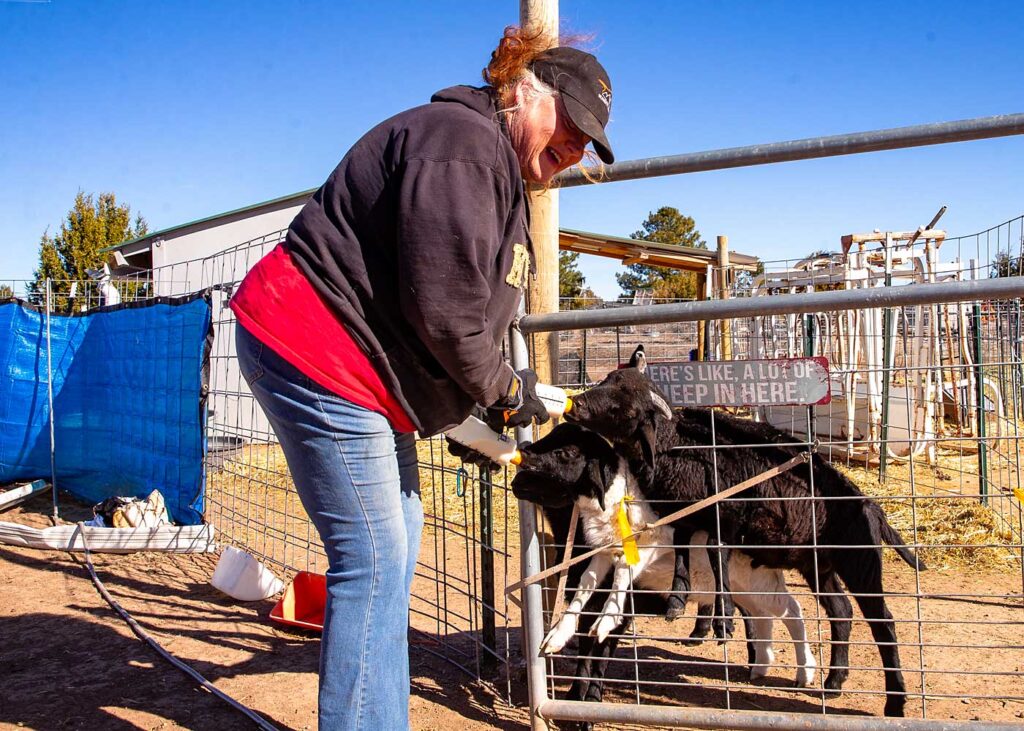
The transition from “city girl” to rancher hasn’t been without friction. Barber has faced significant hurdles with county regulations regarding her off-grid solar setup, rainwater harvesting, and her attempts to build a sustainable Adobe home. Her investigative background often comes into play when she’s forced to cite IRC code books to bureaucrats. “People don’t read,” she notes. “If you don’t know the rules, you don’t know what your rights are.”
Giving Back to the Next Generation
As she navigates the physical toll of ranching, Barber remains one of the most vocal supporters of the East Mountain community. She is a dedicated sponsor of local youth sports, specifically girls’ teams which she believes are often overlooked.
“I played sports, which is how I got the osteoarthritis,” she says. “These kids get no attention whatsoever. It’s part of the giving back.”
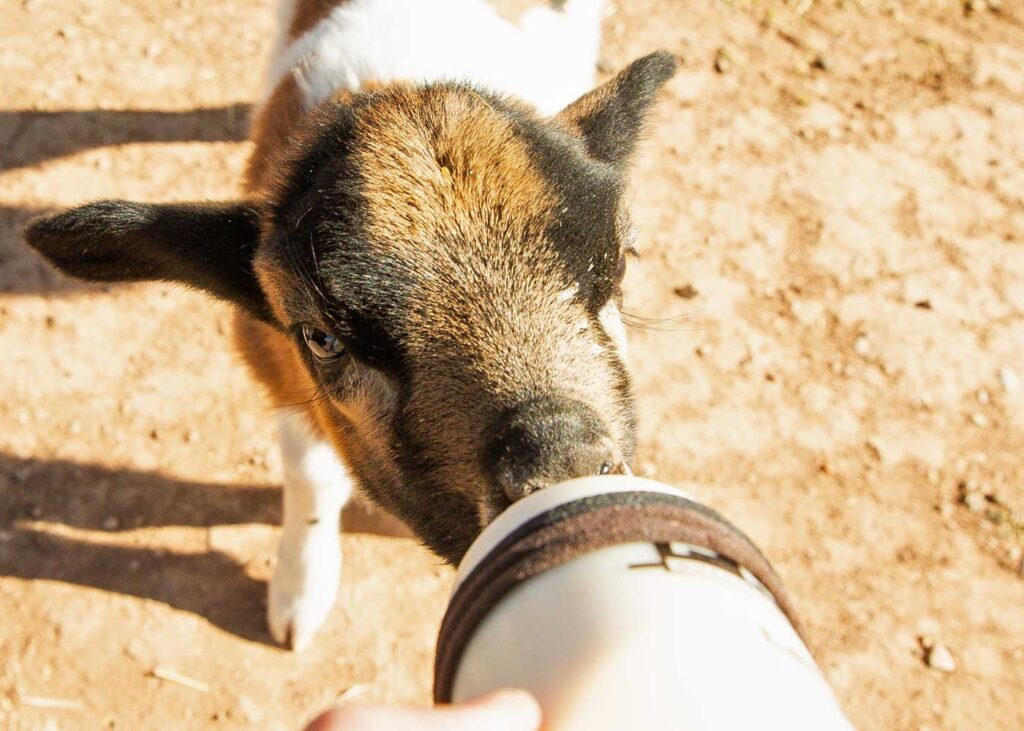
From sponsoring the Albuquerque Roller Derby to local high schools Moriarty and East Mountain teams, Barber sees her ranch not just as a source of food, but as a hub for community support. Whether she is checking on a newborn lamb or defending her right to live off-grid, Kerri Barber is proving that a second act in the New Mexico dirt can be just as impactful as a front-page exposé.
For Barber, the goal remains simple: protect the heritage of the land, feed the people, and show that even a “soft and squishy” reporter can build a resilient future in the high desert.
If you would like to learn more about Summit Leon visit the website at www.summitleon.com.

The Great New Mexico Shortcut: A Tale of Spite, Snow, and the Mother Road’s 100th Birthday
The Power of the Hustle: Moriarty Alum Devyn Haney Turns Childhood Hardship into Multi-State Success
A Safe Place in Tijeras: Giving Abandoned Pigs and Shelter Puppies a New Lease on Life
About The Author
