

A Safe Place in Tijeras: Giving Abandoned Pigs and Shelter Puppies a New Lease on Life
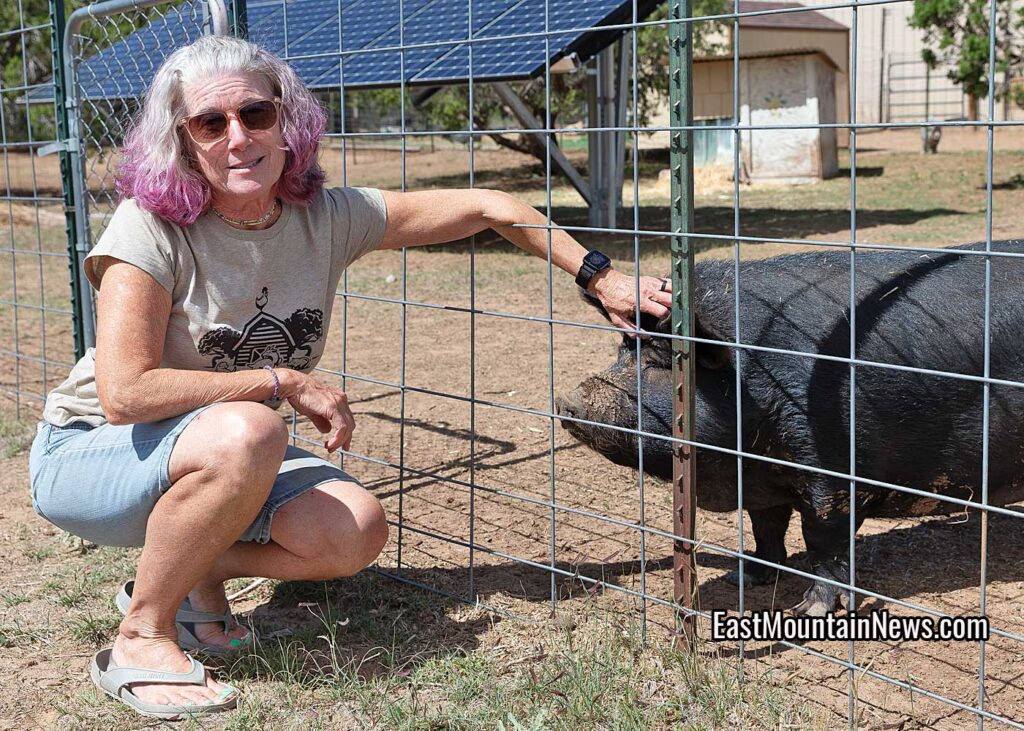
TIJERAS, N.M. — Under the wide shade of an old trampoline in the East Mountains, a half-dozen pigs nap through the midday heat, oblivious to how narrow their escape from slaughter really was.
Just a few yards away, an overweight pot-bellied pig named Rosie waddles toward the fence line at the sound of a gentle voice, looking for scratches.
This is Safe Place Animal Rescue and Sanctuary, a 2.5-acre haven tucked into the pinon-studded hills of Tijeras. Founded three years ago by Kelli Guider, the property serves as a permanent sanctuary for dozens of rescued animals and a transitional shelter for foster dogs.
For Guider, a former tech-industry professional and a vegan for over two decades, running the sanctuary was envisioned as a quiet retirement goal. When she was unexpectedly let go from her corporate position around the same time she met her partner, Robby, the couple decided to move their timeline up and pour their energy into animal welfare full time.
“We just decided to really focus on this and try to make a difference,” Guider said. “I think we’re getting there.”
Today, the sanctuary is home to roughly 34 permanent residents, including 16 pigs, seven goats, seven resident dogs, two chickens, and a revolving nursery of foster puppies.
Debunking the ‘Mini Pig’ Myth
Guider initially focused her rescue efforts strictly on dogs. But when she purchased the Tijeras property with its expansive barn, local rescue contacts quickly reached out about an abandoned pot-bellied pig in Corrales that had nowhere to go.
That first rescue opened the floodgates to an often-overlooked crisis in the pet world: the myth of the “teacup” or “mini” pig.
“There is no such thing as mini pigs,” Guider said, standing near Danny, a former stray pig found roaming wild in El Dorado who now tips the scales at around 80 pounds. “People buy little pigs and are told by breeders they’ll stay little. Most of the time, they don’t.”
When pet pigs outgrow expectations or their owners face hardships and housing loss, rehoming options are practically nonexistent. Unaltered pet pigs listed on neighborhood classified sites often end up bound for meat processing.
Rosie, the affectionate pig in the front yard, almost seems to listen as Guider explained how two other younger pigs arrived from an older couple in Moriarty after a family member left the animals in their care without the resources to support them. Another group of five pigs arrived after being rescued from a 120-pig hoarding case in California.
Guider points out that pigs are clean, affectionate, and intellectually complex pack animals, but their care requires significant infrastructure.
“They’re pack animals — if you have a single pig, they’re going to be lonely,” Guider said. “They’re very smart, very clean, and very clever. They can get out, so you have to have good gates and good fences.”
Managing their physical health is another demanding task. Pigs are easily overfed by well-meaning owners, leading to joint and cardiac complications. Routine hoof trims require specialized care; because local farriers trained in swine care are scarce in New Mexico, Guider relies on traveling specialists from as far away as New Jersey to gently trim hooves and check dental anatomy.
A Communal Safety Net
While the farm animals remain on the property for life, the sanctuary also plays a vital role in regional shelter networking. On the property sits a dedicated casita used exclusively to house nursing mother dogs and their litters pulled from overcrowded municipal shelters.
Partnering rescues cover the veterinary care and adoption placements, while Guider and Robby provide around-the-clock shelter and socialization for the roughly eight weeks until puppies are ready for their forever homes.
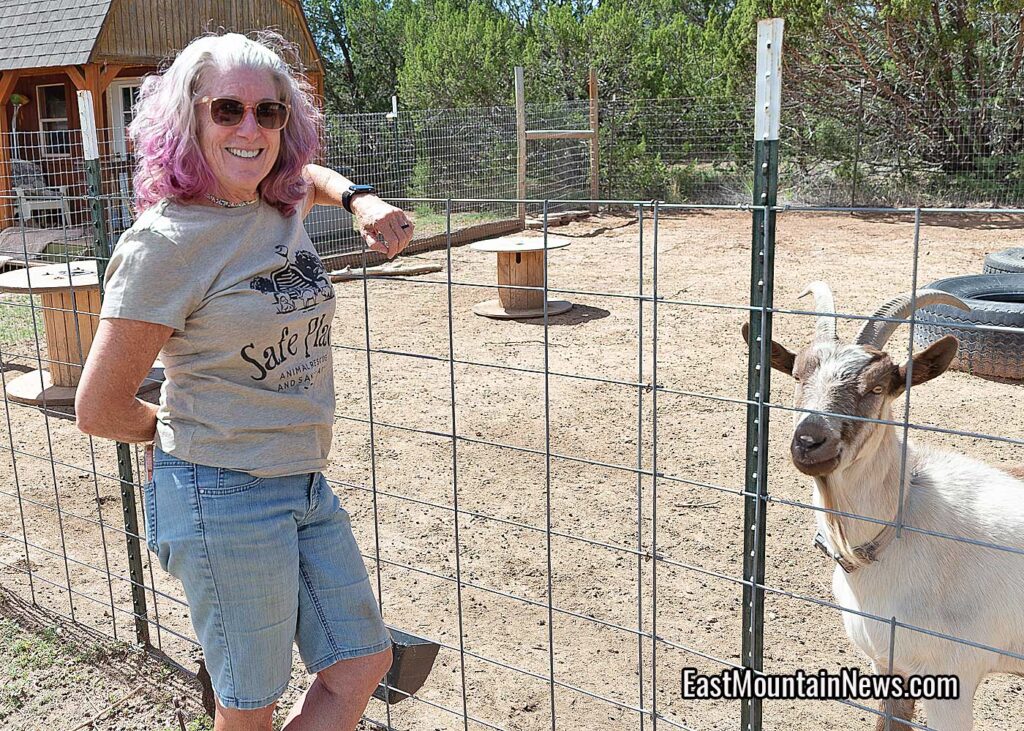
Out in the pasture, the sanctuary’s goat pen houses animals from equally complicated circumstances. Ernie, the herd’s elderly statesman, and a fainting goat rescued locally share space with Darla, a goat whose recovery rallied the East Mountain community.
After Darla was attacked by dogs in a communal living environment, her former owners were unable to afford the veterinary care needed to save her torn neck. Guider offered to take her in if medical bills could be covered, prompting East Mountain residents to pool their funds. Darla survived, and her original breeder now visits regularly to help trim the herd’s hooves.
Guider also took in two working Great Pyrenees to guard the pastures: Nora, who arrived shut down and unsocialized from the Bernalillo County animal shelter, and Nico, a friendly rescue recently brought up from Roswell Street Dog Rescue.
Facing Capacity and Looking Ahead
Operating an animal sanctuary requires immense emotional and financial stamina. Guider admits that facing end-of-life care for dozens of aging animals can weigh heavily.
“Every one of them is going to die under my watch, so we’ve got to take care of everyone to end of life,” Guider said.
Equally difficult is turning animals away. With Robby still working a full-time job and high feed and veterinary costs, Safe Place has placed a temporary pause on intakes once an agreed-upon pig arrives next month.
To bridge the gap, Guider is actively working to expand the sanctuary’s local footprint across the East Mountains. The organization relies on monthly sponsorships — often encouraging groups of friends to chip in small recurring donations to cover individual animal feed costs — alongside community fundraisers.
The sanctuary is currently hosting an online charity auction, the “Sit, Stay, Bid Auction for the Animals at Safe Place,” through fundraising platform Zeffy, with details and updates posted on the sanctuary’s official Facebook page.
For Guider, the daily labor of mucking stalls, managing fence lines, and coordinating medical runs is far more fulfilling than a conventional retirement.
“We don’t ask anything of them,” Guider said, watching Rosie settle into the dirt for a belly rub. “We just want to be able to take care of them, and it warms my soul to be able to help these guys.”
To reach out to Safe Place Animal Rescue and Sanctuary check out their Facebook page at https://www.facebook.com/profile.php?id=61568436977711

Hidden History in the “Scissors”: A Guide to Tijeras Pueblo

The Pack Leader: Carmen Dorsey-Spitz and a New Ceiling for New Mexico Running

All Creatures Great and Small: Young Veterinarian Fulfills Childhood Vow to Serve Rural New Mexico
About The Author
