

Carrying the Ball Home: How a Team of New Mexico Artists Brought a 900-Pound Bronze Warrior to Life
BY RUSSELL HUFFMAN
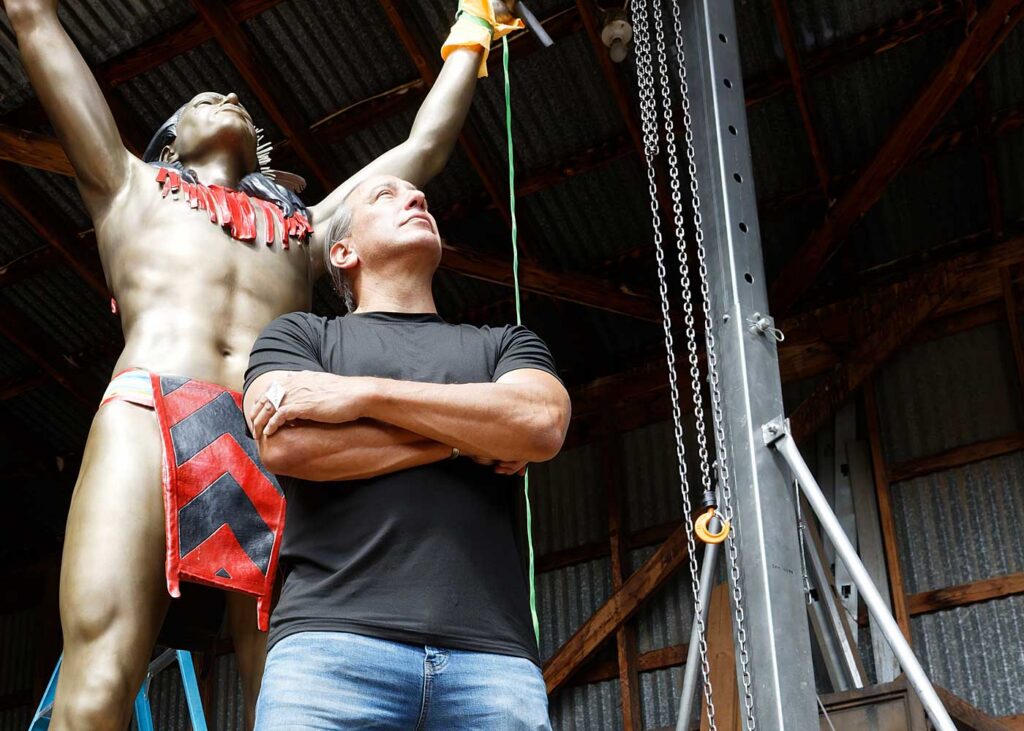
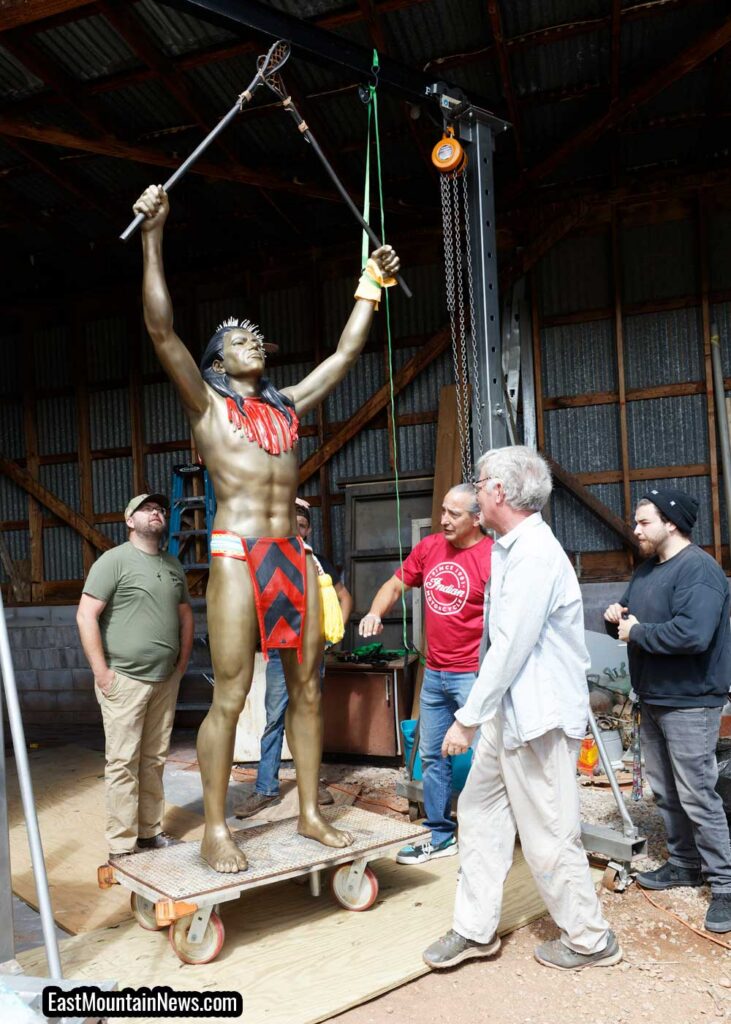
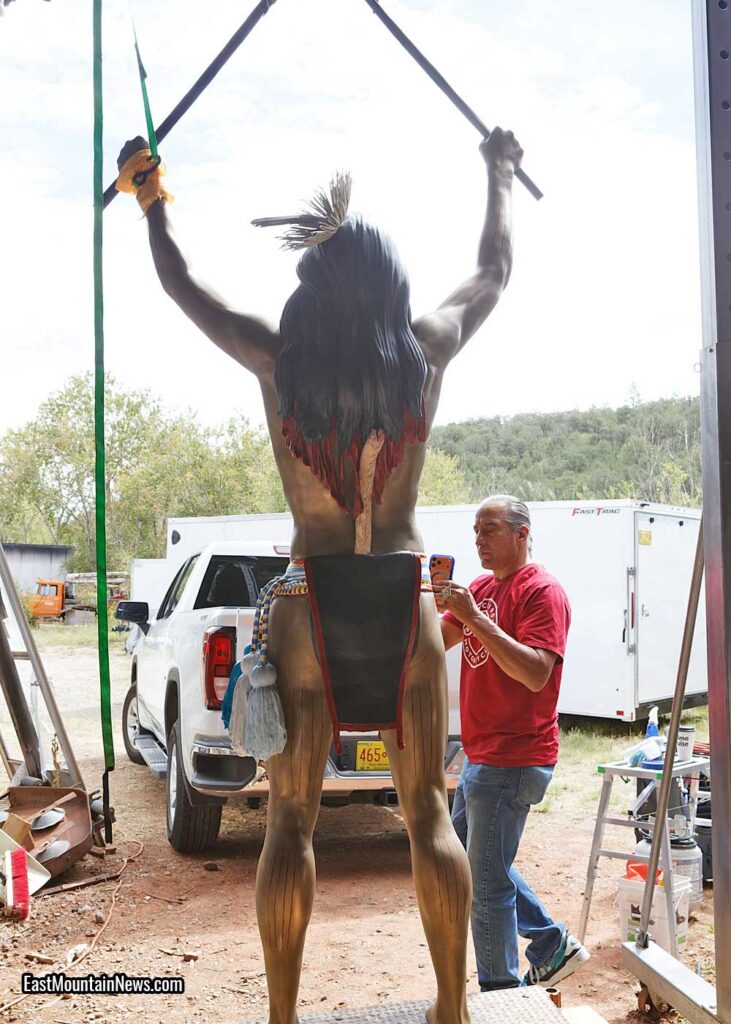
He stands 7-foot-3, weighs nearly 900 pounds, and grips the wooden sticks of an ancient game with the coiled intensity of an athlete about to sprint into open turf. Taller than Shaquille O’Neal and cast entirely in bronze, the monumental figure prepped for transport along Interstate 40 to Macon, Georgia, is not a generic tribute to an imagined past.
He is Netche Gray.
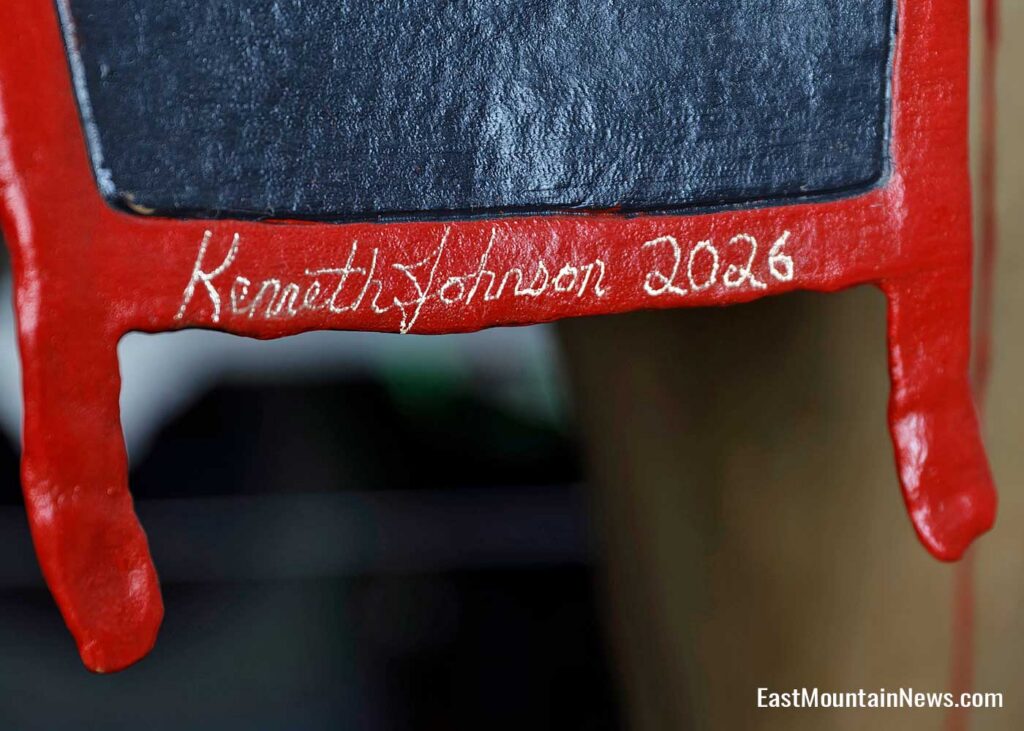
To Muscogee/Seminole artist Kenneth Johnson, that distinction carries the weight of living heritage. Born in 1897, Gray was a full-blood Muscogee man who served his country in uniform during World War I—enlisting during an era when Native Americans were not yet recognized as U.S. citizens. After the war, Gray became one of the most revered culture bearers of the 20th century, serving as an anchor on the ceremonial grounds. His voice was immortalized in 1969 when he led the Buffalo Dance, the Long Dance, and Stomp Dances for the landmark Indian House audio recordings, Songs of the Muscogee Creek.
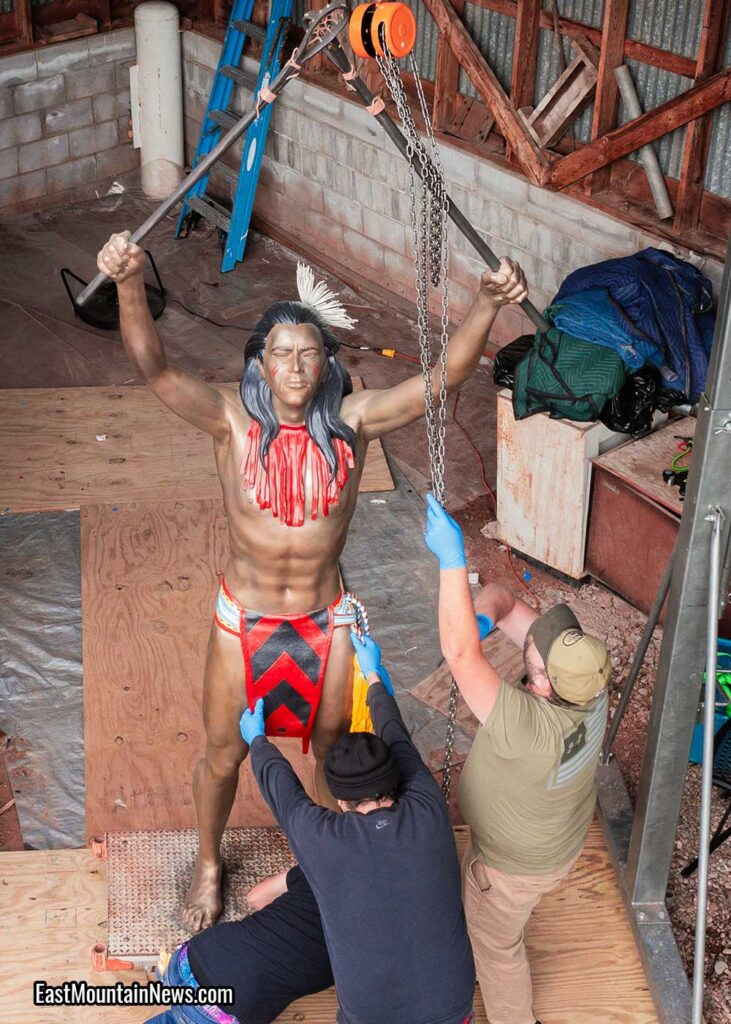
While early circulating accounts described the sculpture as a tribute to Johnson’s grandfather, the artist set the record straight: the monument belongs to Gray, whose life bridged ancient ceremonial traditions with modern survival.

“A lot of people think this is a historic figure, but he’s a real person,” Johnson said as the bronze was readied for travel. “If he was here today, he’d still be doing the same thing. He would be playing stickball. He would be participating in ceremony that is ongoing.”
For Johnson, a 59-year-old Santa Fe-based artist who spent 36 years as a jeweler before completing a 2018 residency at the Institute of American Indian Arts, the journey carries profound personal and tribal significance. During the forced removals of the 1820s and 1830s, the Muscogee people were driven from their homelands in Georgia and Alabama along the Trail of Tears into Indian Territory, now Oklahoma.
“That’s why we left behind the canoe. That’s why we left behind the bow and arrow at that time,” Johnson said. “So now it’s time to return.”
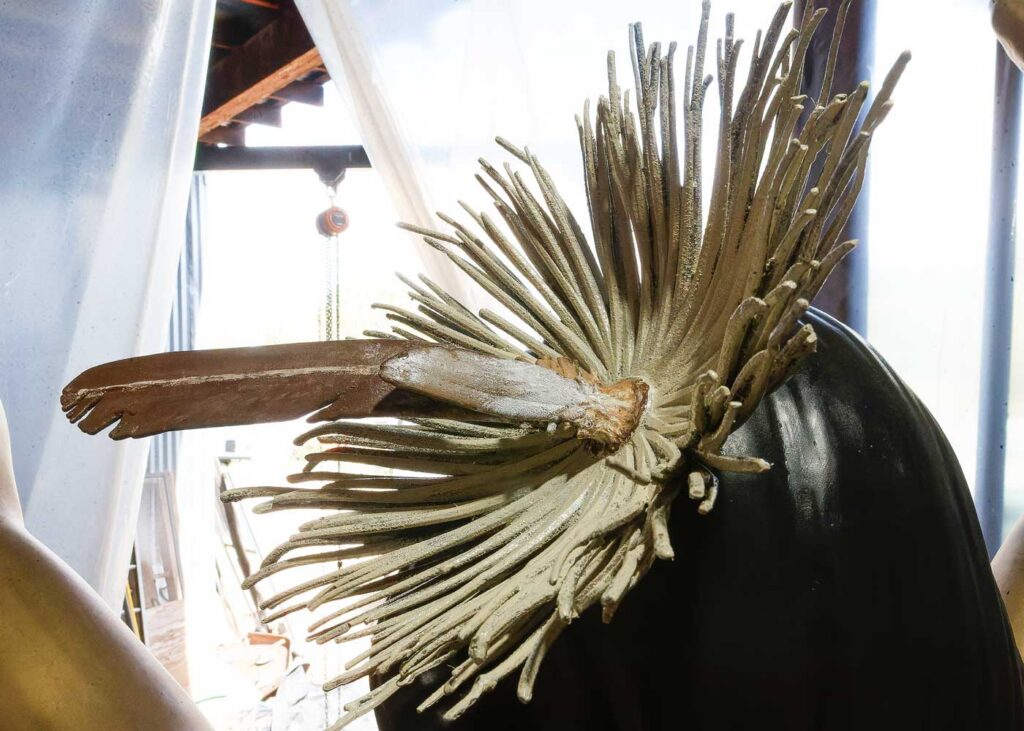
Bringing Gray back east required two years of meticulous work. Johnson spent months consulting tribal elders and researching historical artifacts to ensure every detail was culturally authentic. When permanently placed in Macon, the bronze will face west toward Oklahoma, looking directly back along the road of exile toward the living Muscogee Nation.
The concept resonated so deeply with Muscogee Nation Principal Chief David Hill that after viewing the clay model in Johnson’s studio, he proposed a companion piece: a second stickball player to be cast and placed in Oklahoma, oriented east toward Macon so the two athletes align across time and space.
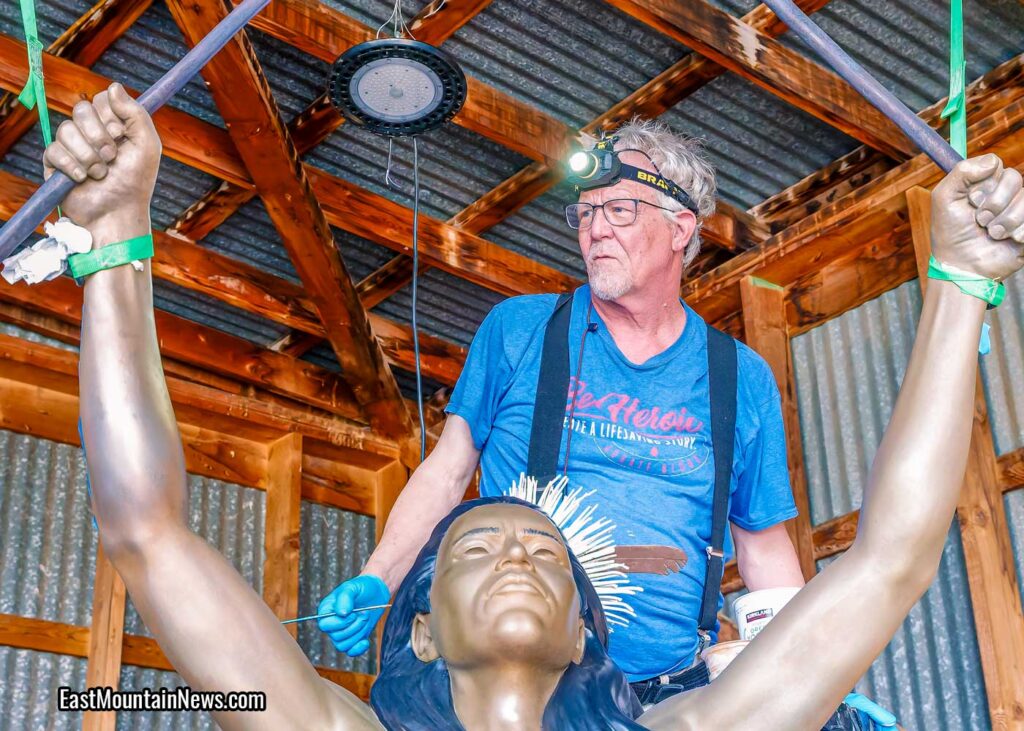
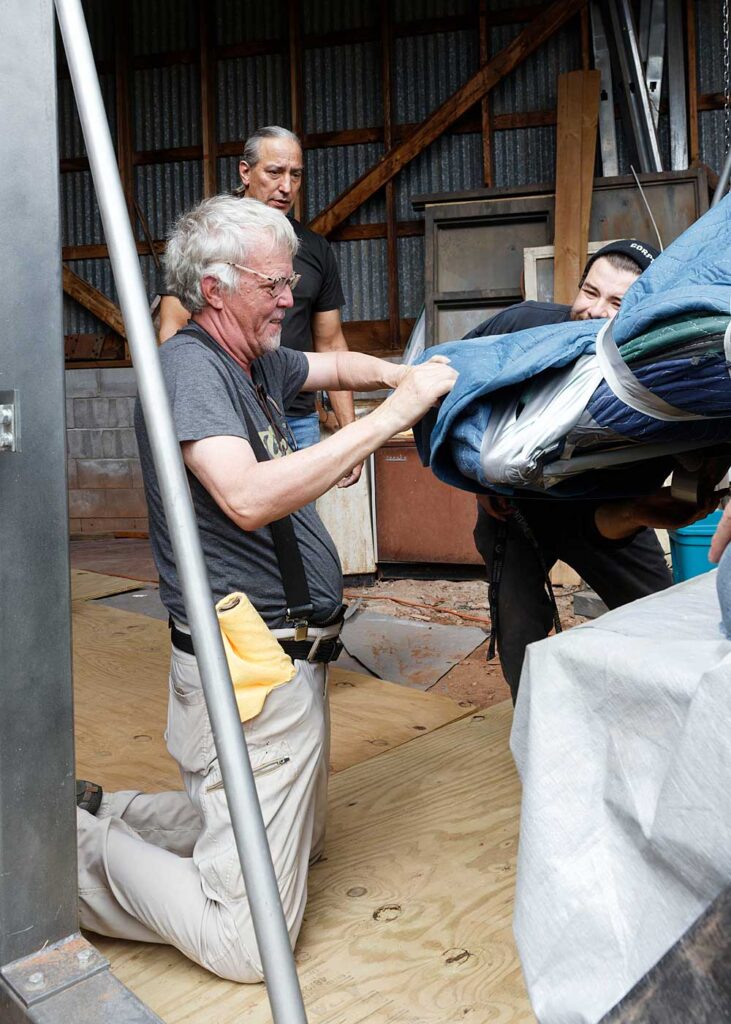
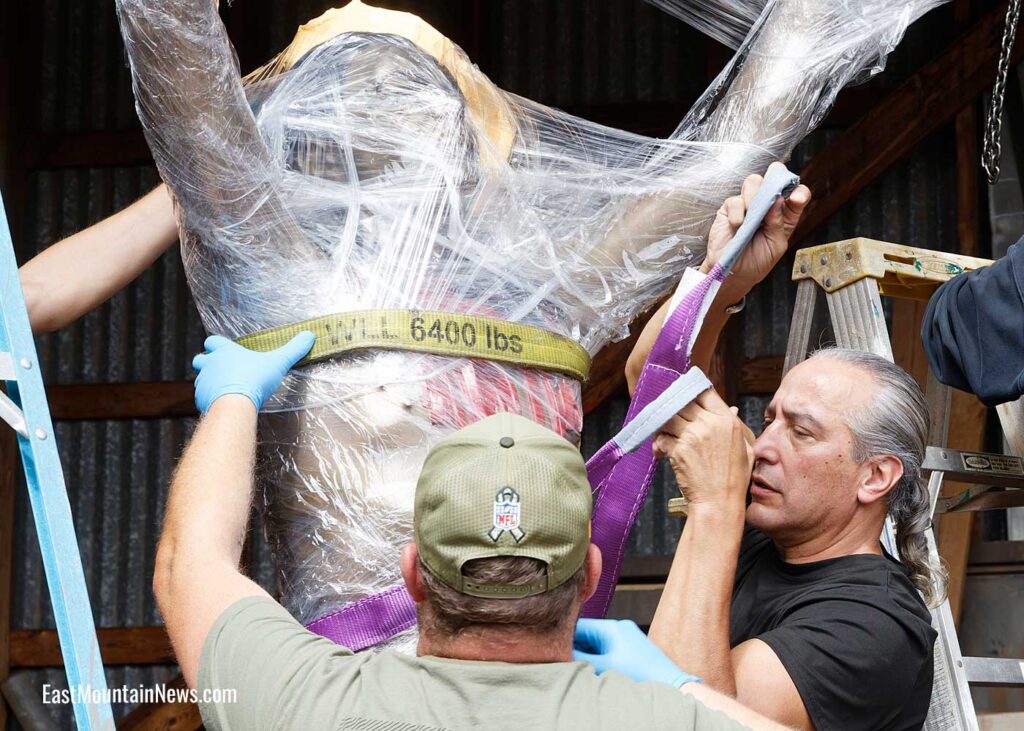
Before Gray could begin the 20-hour journey across the South, he spent six intense days inside a plastic-lined, dust-free workshop in Cedar Crest, New Mexico, where a small team gave the raw metal its skin.
This speed-up video shows the process of wrapping and loading the 900-pound bronze.
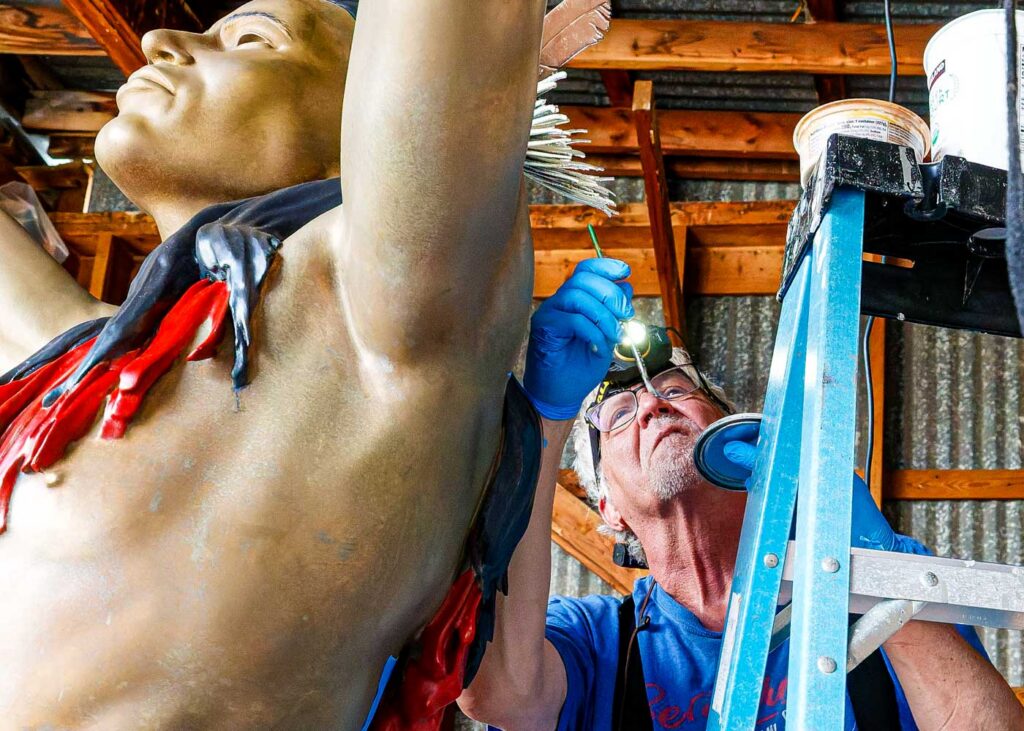
Fresh from the foundry, raw bronze has the bright, pale gleam of a brass candlestick. Turning that slick surface into the lifelike, sun-weathered tones of an athlete fell to 68-year-old sculptor, conservator, and curator William Bock.
Working 10- to 14-hour days in high summer heat Bock drew on decades of fine art training to push the project over the finish line.

“It’s a huge weight off my mind, and I don’t just mean the weight of the bronze,” Bock said. “You want the artist to be happy, but you also want the ceremony to go out. This project is ceremonial and historically significant. You feel that connection of peoples across the country.”
Bock used a layered, high-durability approach to ensure the uncovered monument can endure decades of middle Georgia’s heat and humidity. After heating the bronze to 180°F, he misted it with ferric nitrate to develop an even, deep brown patina. From there, he began the polychrome phase, applying an adhesion promoter followed by high-grade acrylic enamels pioneered by Golden Artist Colors, which remain more flexible and weather-tolerant on outdoor metal than traditional oil-based paints. He sealed the piece with an automotive-grade gloss lacquer to provide car-like protection before a future wax finish.
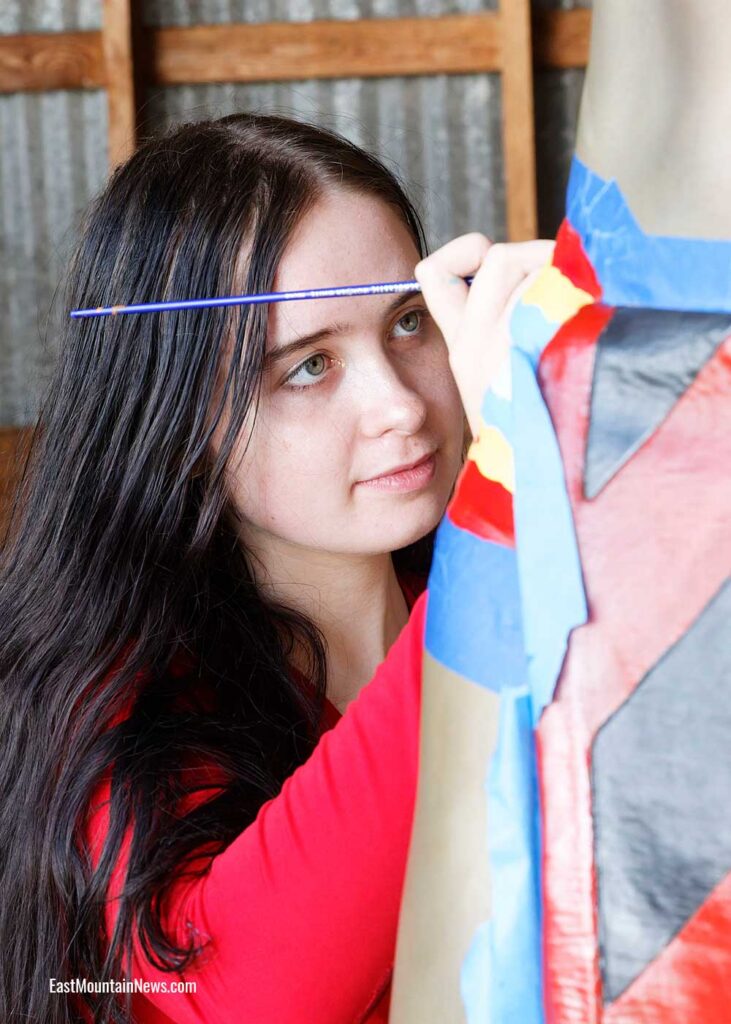
Working alongside Bock was 20-year-old volunteer Angelica Royal, a neighboring artist eager to learn large-scale finishing techniques.
“I actually kind of loved working with them,” Royal said. “I liked painting the statue. It was really fun to do.”
With the final coats cured and the 900-pound warrior strapped securely into the bed of the truck, Johnson prepared to head east down I-40, stopping in Arkansas before pulling into Macon.
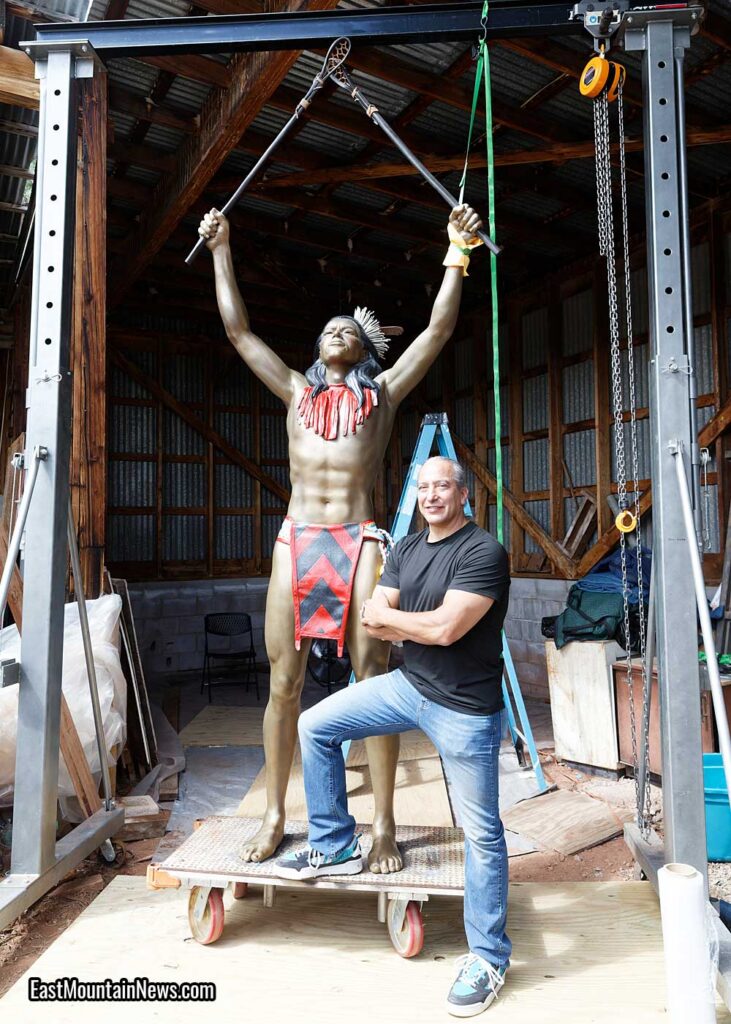
For the artist, navigating elder expectations, technical chemistry, and tribal history ultimately came down to an athlete’s focus.
“It feels good because I’m the one to do it, and I’m carrying the ball,” Johnson said. “You know, you’re playing on a team.”
The Moriarty Shortcut: How a Cross-Country Footrace Helped Bring Route 66 to the East Mountains

The Power of the Hustle: Moriarty Alum Devyn Haney Turns Childhood Hardship into Multi-State Success

The Pack Leader: Carmen Dorsey-Spitz and a New Ceiling for New Mexico Running
About The Author
